03.11.2026
Rhiz
Radwan Ghazi Moumneh & Frédéric D. Oberland, Jessica Moss, Asifeh, Inou Ki Endo
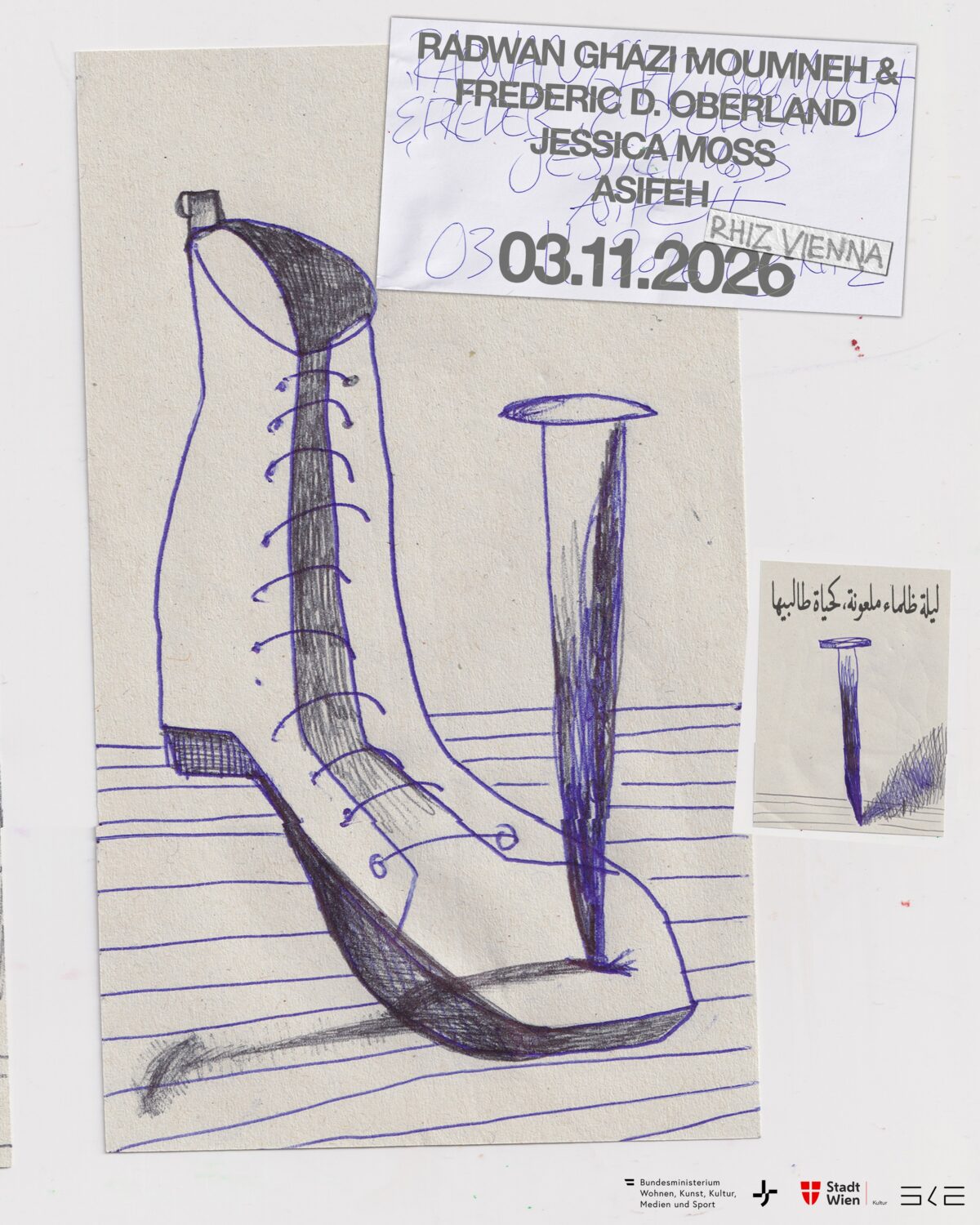
RADWAN GHAZI MOUMNEH & FRÉDÉRIC D. OBERLAND
Radwan Ghazi Moumneh and Frédéric D. Oberland are longstanding collaborators and friends who debuted their eponymous duo project with the Eternal Life No End LP released on Constellation in April 2026. What began as quiet shared experiments and occasional intimate live performances at Moumneh’s Hotel2Tango studio in Montréal, evolved into a full-scale transatlantic recording project, with the co- composers/co-producers expanding their experimental songcraft in a melding of ritual electronics and contemplative devotional forms.
Radwan Ghazi Moumneh is a Lebanese artist, producer, and musician based in Tiohtiá:ke/Montréal, best known as founder of Jerusalem In My Heart (JIMH), an interdisciplinary project rooted in contemporary explorations of Arabic musical traditions and socio-geographies, with various partners creating/projecting 16mm analog films, and sometimes involving other musical, theatrical, and contemporary dance collaborators. Moumneh is also a renowned producer/engineer whose credits include Matana Roberts, Alanis Obomsawin, Nadah El Shazly, Sarah Davachi, Jessica Moss, SANAM, and many more.
French multi-instrumentalist and photographer Frédéric D. Oberland is co-founder of Oiseaux-Tempête, the acclaimed musical collective that navigates intersections of avant-rock and free improvisation, with a string of albums since 2013 on Sub Rosa, and releases on NAHAL Recordings and Ruptured. He is a founding member of FOUDRE! and SIHR, performs in many other ensemble and solo configurations, has appeared on collab albums with the likes of Aidan Baker, Irena Tomažin, and Richard Knox, and composes for film. Oberland’s photography is collected in the 2026 art book Vestiges du Futur / Vestiges of the Future published by Sun/Sun Editions and his photos have appeared in a wide range of publications and album covers.
Across two decades, Moumneh has challenged assumptions about what Arabic music can denote, and opened pathways beyond inherited forms. Oberland has relentlessly explored improvisation and collective composition over this same period, amassing wide-ranging stylistic and instrumental acumen. On Eternal Life No End, Oberland plays Buchla and modular synths, alto saxophone, and clarineau; Moumneh sings and plays buzuk and rababa; both contribute electro-acoustic processing, and share rhythmic duties with acoustic hand percussion and drum machine programming. Together they shape a musical dialogue at once intimate and outward-looking, inscribing a sound world fragile yet luminous. Electronics press against the grain of the buzuk; modal lines drift into noise; drones shimmer and eventually break into rhythm. If Moumneh questions cultural inheritance and Oberland treats music as a site of collective action, their collaboration creates a place where these impulses converge and reconfigure. Eternal Life No End traces sonic territories between memory and invention, devotion and abrasion, the personal and the expansive.
JESSICA MOSS
Jessica is renowned for her unique and inventive approach to building immersive live sonic environments. Her solo performances are built from violin, voice, bells, loopers, and effects pedals, and balance delicately between composition and improvisation, fragility and maximalism, sorrow and joy. She leads audiences through what feels like an intimate performance ritual; imbued with compassionate intentions, improvisational possibility and collective listening. Moss believes live music, at its best, can be a truly collective experience that has the power to bring our souls and our cells together in a way that very little else can do. As the world crumbles under the ugly manifestations of late-stage capitalism, audiences are invited to make space for collective mourning , with an offering of hope for the future.
ASIFEH
Asifeh’s music inhabits the space between decaying technologies, sampled fragments, fractured rhythms, and an urgent human voice. Working with obsolete and failing machines, he draws fragile, imperfect sounds that pit the will to live against the machinery of erasure. His process embraces the unpredictability of recording in takes, allowing the music to retain the accidents and rawness of its making. Raised in Ramallah and based in Vienna, Asifeh co-founded Ramallah Underground, a pioneering Palestinian collective born out of the Second Intifada and active from 2003 to 2009. His four solo albums, from Iradeh (2012) to Tasalul (2022), trace an evolving practice spanning hip-hop and experimental electronic music, alongside the self-released synth-based projects Hideout and 2003.