SENTIMENTAL VALUE – In conversation with Torus

“DOWNLOADING APHEX TWIN ON LIMEWIRE BY ACCIDENT IS MY ORIGIN STORY”
Let’s start with a very basic question: how are you musically socialized? Did you belong to any scene or community in your hometown The Hague?
There was a complete absence of music that I liked in The Hague. The city is famous for electronic music like Bunker Records. There’s a huge squatting scene, and lots of techno and electro. There’s a strong connection between The Hague, Detroit, and Chicago so it’s also lots of house music too.
I was 14 years old when I started making music. I found music I liked by digging on YouTube. I was looking for sounds I never heard before, that would trigger some sort of visceral response. I think my electronic music awakening was hearing some drum and bass remix of The Prodigy on the radio and then looking for it on Limewire. Through this I ended up finding Aphex Twin – I believe it was his track “Flim“. This was when i was about 10 years old. I guess you could say downloading Aphex Twin on LimeWire by accident is my origin story.
From there my interest in music was constantly developing. After a while I got into Flying Lotus and the L.A. Beat Scene. I started releasing music in that same sense under different names. There was not really that much happening in my direct environment. In The Hague I was listening to electro, Ed Banger, Justice, Erol Alkan. Daft Punk was my first big music obsession, specifically Alive 2007. Sadly, I never got to see them live. I had a lot of friends that would listen to soul and funk music and the sounds from L.A., like J Dilla and Ras G was an experimental version of that, with lots of sampling.
So you produced in that direction?
That’s where I started. It’s very specific. I thought it didn’t sound like anything else. But it ended up becoming more and more defined by the limitations of a genre. That’s when I started losing interest in it. I always used to think that my music was about percussion and complex rhythms but around that time was when I realized that it wasn’t about that at all. It was just a vehicle to put melodies in. Over the years I got to the core of my music. And now I just make music without drums, basically.
Ambient music got really big during Covid. Everyone started listening to ambient. Either in playlists, mixes, or in apps that promised to relax and soothe you. What drew you personally to that genre?
I’m looking for new music constantly. Once I find something I like, I obsess extensively over it, playing it on repeat over and over until a small detail starts freaking me out. This happens a lot less in ambient; you can just listen to it forever, the feeling rarely gets interrupted by sounds that don’t belong.
Obviously trance music was or is a very an important factor in Dutch music culture, and I can hear references to this genre in your music, even if you’re more leaning towards ambient in recent productions.
I used to listen to trance music all the time with my dad. He’s a massive trance fan. We used to listen to tracks like Barthez – “On the move”. That’s one of the first CDs I’ve ever owned. I got it from my dad. Me and him would just listen to trance in the car and he would have these compilation CDs. We always used to listen to songs like PPK – “Resurrection”, and I’m thinking of another song,.. maybe I can find it – that’s like a perfect example. Carlos – “The Silmarillia”.

Ok, yeah. Is it a Pan flute?!
Yeah, it’s amazing. It’s so melodic. We listened to a lot of Dutch trance like Tiësto and Ferry Corsten and stuff. They were all into big chords and pads. So the euphoric, melodic trance was huge here. Even when progressive trance became much bigger in countries like the UK, peak-time trance in the Netherlands specifically is hyper-melodic.
Anthem trance. I think this might be one of your inspirations – it prepared the ground for your sensibility for melodies and emotional dramaturgy. The trance producers from back then didn’t shy away from big emotions, quite the opposite, they embraced it in a way that reminds me even of the opera. Your music is like that too in a way. At its core it’s all about affect and emotion.
I think what’s cool is that trance is so unpretentious about it. They’re just like: “Let’s make the most euphoric song ever.” I align very heavily with that sentiment.
“Who is gonna be pretentious about love?“
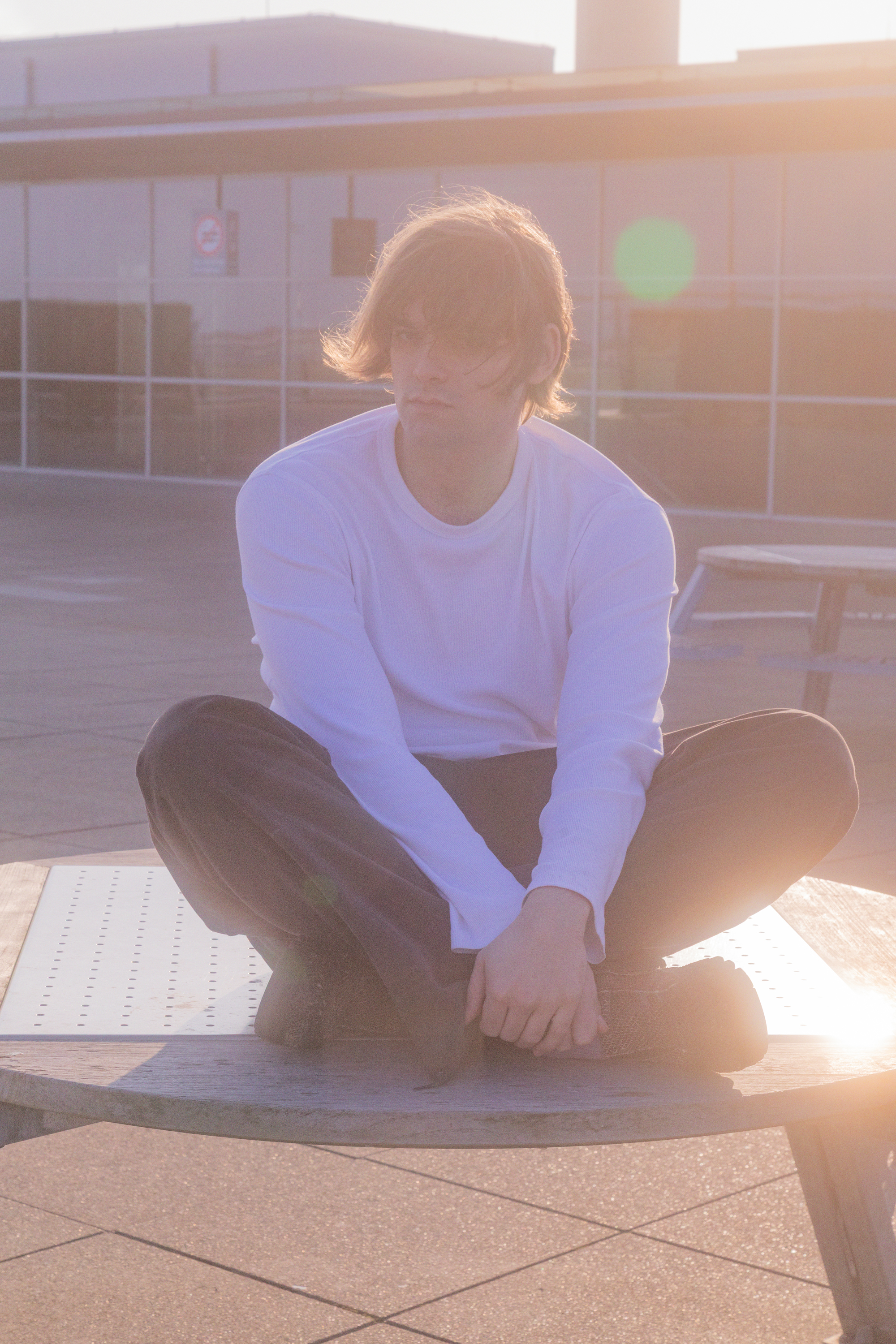
They don’t mind if it’s kitsch or bad taste.
This is why I relate to trance so much, because when you experience overwhelming emotions, you don’t care if something is kitsch. You just want to experience and translate that feeling as puristically as possible. It makes total sense that it’s unpretentious because who is gonna be pretentious about love? I feel like you cannot be tactical about these sort of emotions that you get overwhelmed with. You just allow it. Summer of Love has so many cliché references. But it’s also about how can I turn these songs that are overdone into something that translates this beautiful feeling, fully ignoring notions of things being tasteless. It’s like you get to the core of something and you just forget whatever social or cultural relevance it had. Trance music has that too.
Beauty is always bordering on kitsch.
I think an artist’s sensibility is to decide what is good and what isn’t. Other people can decide then if it’s kitsch or not.
But this affective power of sound, embracing love, sadness, melancholia, nostalgia. Why is this your driver? Why is at the core of your creative output? What is it about emotive melodies and harmonic atmospheres that triggers you?
Music has the power to trigger the most direct emotional response in any listener, I think maximizing that potential is very powerful and music that does that is also the music I enjoy the most. In my work I refer a lot to classical romanticism. The thing that I’m doing is just a contemporary, late capitalist version of that . In romanticism they were appreciating humanist and natural beauty. Now we are in a post-anthropocene environment but beauty still exists everywhere. The only thing that I’m really doing is highlighting it.
“beauty still exists everywhere”
How dangerous is it to come close to cliché? Are you trying to circumvent or rather embrace it? Cause stereotypes like a sunset can still activate the collective unconscious.
I don’t really think about it at all. I love both – clichés and novelties, but I don’t aim to be either. Clichés can be a powerful tool to unlock an emotional response without too much work, which I quite like, but it’s not a goal nor an anathema.
New Romanticism became a thing in the art world in the past years. Emotional vulnerability, the Weltschmerz of the younger generation – it’s like the depth of human feelings is running counter to the cold digital surfaces we’re surrounded by. This neo-romantic strand in art leads back to artists like Bas Jan Ader, who was Dutch as well, active in the 60s/70s. His oeuvre was a lot about deep and sincere emotions. He was posing in front of a sunset, he was filming himself crying. Possibly a long shot, but were you inspired by him in a way?
People have brought up Bas Jan Ader before, and while my work doesn’t directly refer to him, I’d like to think that there’s a cross-generational melancholic response to growing up in the context of Dutch sobriety while simultaneously being overwhelmed by the beauty of Dutch beaches, land and cityscapes and coming of age.
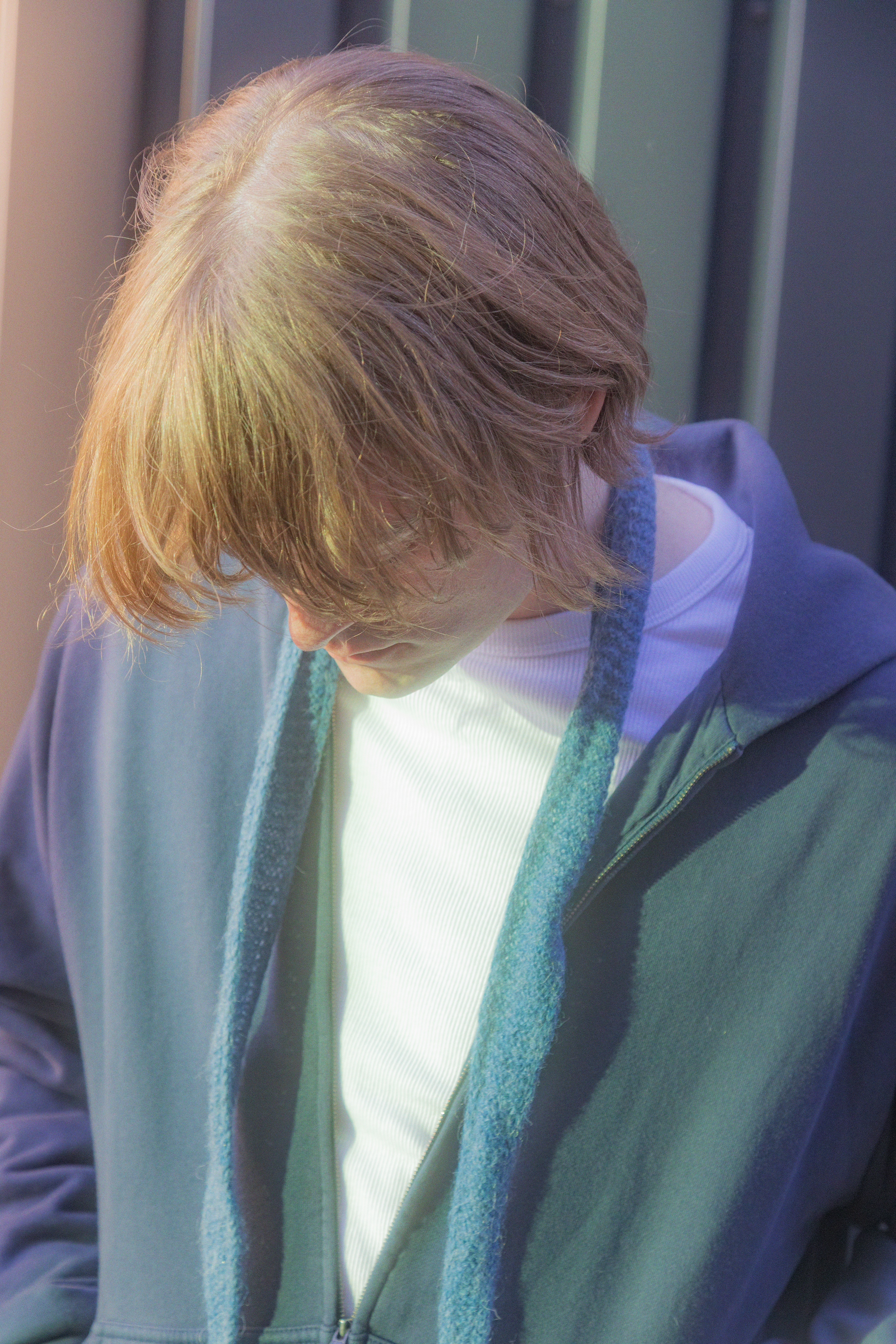
It’s funny cause the title Summer of Love could actually be from a coming-of-age movie. It feels like you found a very direct way of channeling your emotions.
For me, it feels like magic almost. When I thought of the name Summer of Love, I just knew that that was the perfect name. It just comes to me. t’s just a feeling and you just feel if it’s right.
Sometimes when try to think in terms of methodologies around my work I come to the conclusion that most of it is just totally intuitive, without a consistent approach. The same way that i sample or shazam music, or when i’m watching a movie and someone says something really beautiful that sounds so perfect and unpretentious and I write it down. Or if a song has a vocal sample that’s maybe three words of a sentence that they repeat, sometimes that’s just enough.
“I wish I could turn back time…”
Yes. I think that acapella is very beautiful and it’s beautifully sung, and it’s such a universal feeling, It speaks to me strongly, That’s how I filter.
You are interested in shared feelings and collective memory.
And its cultural (im)potence.
Emotionmaxxing is one core feature of pop music where songs are mostly about love. Would you say that you’re subtracting the emotive essence of these songs? That you are looking for the sentimental value, to put these samples in context with ambient music, club and subculture?
Almost all music is about love, but so many of it doesn’t feel like that at all. Often there’s just one small moment or chord change that really resonates the feeling. I just zoom in and stretch these moments so they feel like they can go on forever.
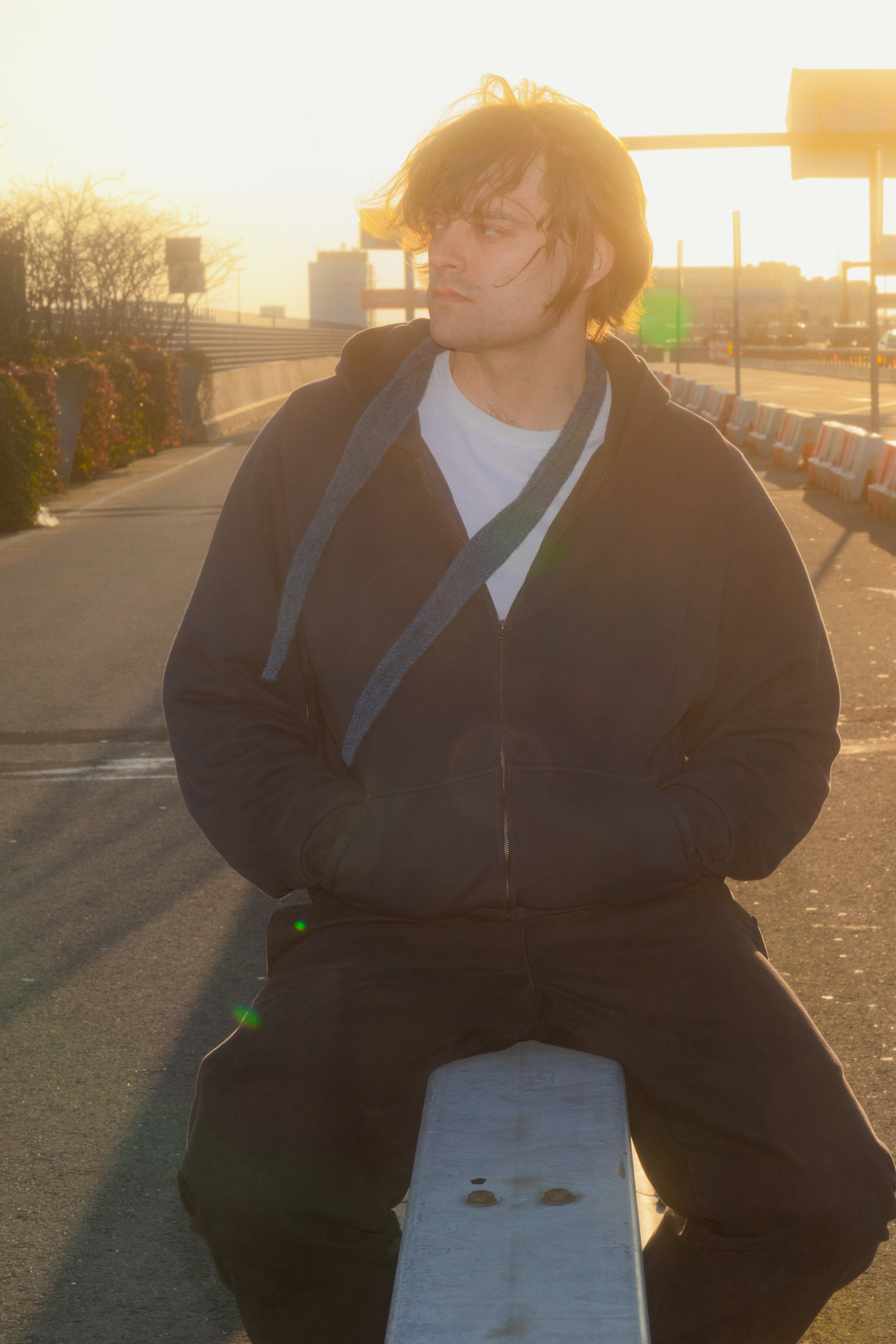
“I try to speak to a universal nostalgia.”
You’re recontextualising fragments of pop music, but your approach towards pop culture has never been ironic. It is a respectful gesture, when you’re reaching to the core of pop which is basically to evoke emotions and offer a screen for projection, imagination and identification.
Using pop samples is a good vehicle because a lot of people recognize them. Everyone has a relation to these sounds and I try to speak to a universal nostalgia. One that I can project my feelings onto, but that I also know can speak to others.
You were invested in exploring the feeling of nostalgia with your music and art for a long time. Which is not only a human sentiment, but is also at the core of a concept that went big in art discourse of the early 2000s with Mark Fisher and his idea of hauntology. I’m wondering if these concepts are in any way part of your music production?
Because I’ve defined the conceptual approach to my practice and my music a while ago, I try to not think about it when I actually make music. In the end, I think you can project a lot of concepts on Summer of Love, but if you listen to it, I don’t think you have to consider them. You don’t need it, because the music speaks for itself.
There are moments where I was making songs when I was hurt or when I was feeling extremely euphoric. So these are moments from different parts of my life in the last years and I just took all of them when I compiled the record. It was like a compilation of emotional moments in my life. It’s nice to have these kind of conceptual reflections but that’s not the first thing that the music is about at all. I think that music should never be about that anyways.
We all grew up in a world that doesn’t exist anymore thus the feeling of nostalgia is very strong with us, I feel. When James Ferraro is about the VHS- and cassette-generation as music critic Simon Reynolds states, and, you know, Mark Leckey – an artist that resonates in your work as well – is the about the Youtube generation, which generation are you channeling then?
The Shazam generation?
That works, yes.
The new iPhone has this button – you can do whatever you want with it. Mine is a Shazam button. I’m constantly Shazaming everything.
“I’m constantly Shazaming everything”
I think in art theory, people are saying all the concepts and ideas have already been done and every sound and chord progression has already been recorded, and of course I make originally recorded music too but – especially for Summer of Love – I gave myself the rule to find existing chord progressions or moments of songs that are perfect as they are and to just combine them all and harmonize them. But then you listen to the song and there’s still somewhat of a signature of me in there, even though I just compiled all the songs with the highest success rate of getting sued for in one.
So you’re like post-post-modern – you wouldn’t say the author is dead, but you believe in authorship again?
There’s just a new hybrid form of authorship because every sound you make is a combination of so many histories and generations of people developing whatever process for you to create the sound when you press on a key. You can say that’s original music but I can take a little section of this chord from this famous song and I put reverb on it, to me that’s the same thing
I’m very interested in cultural relevance. And this approach adds a kind of a hidden value to it for me. It gets me excited. In a lot of my music there are tons of subtle references. It’s ideal when people recognize something but they don’t know what it is.
It becomes a vibe then, I guess? I was reading a book by the art historian Valentina Tanni recently. She says that online cultures are all about mood and vibe. She states in Exit Reality that this illustrates a way of interpreting reality. “It is a view based on the belief that the sensations triggered by certain experiences can be recreated and conveyed to others by means of images and sounds. Not generic sensations – such as calm, sadness, or euphoria – but specific emotional temperatures, atmospheres, and mental states that are difficult to put into words.” She talks about tuning into the same “emotional frequency”, about “vibe culture”. Can you relate to that?
I personally hate the word vibe, but I think hyperspecific emotional temperatures are the goal.
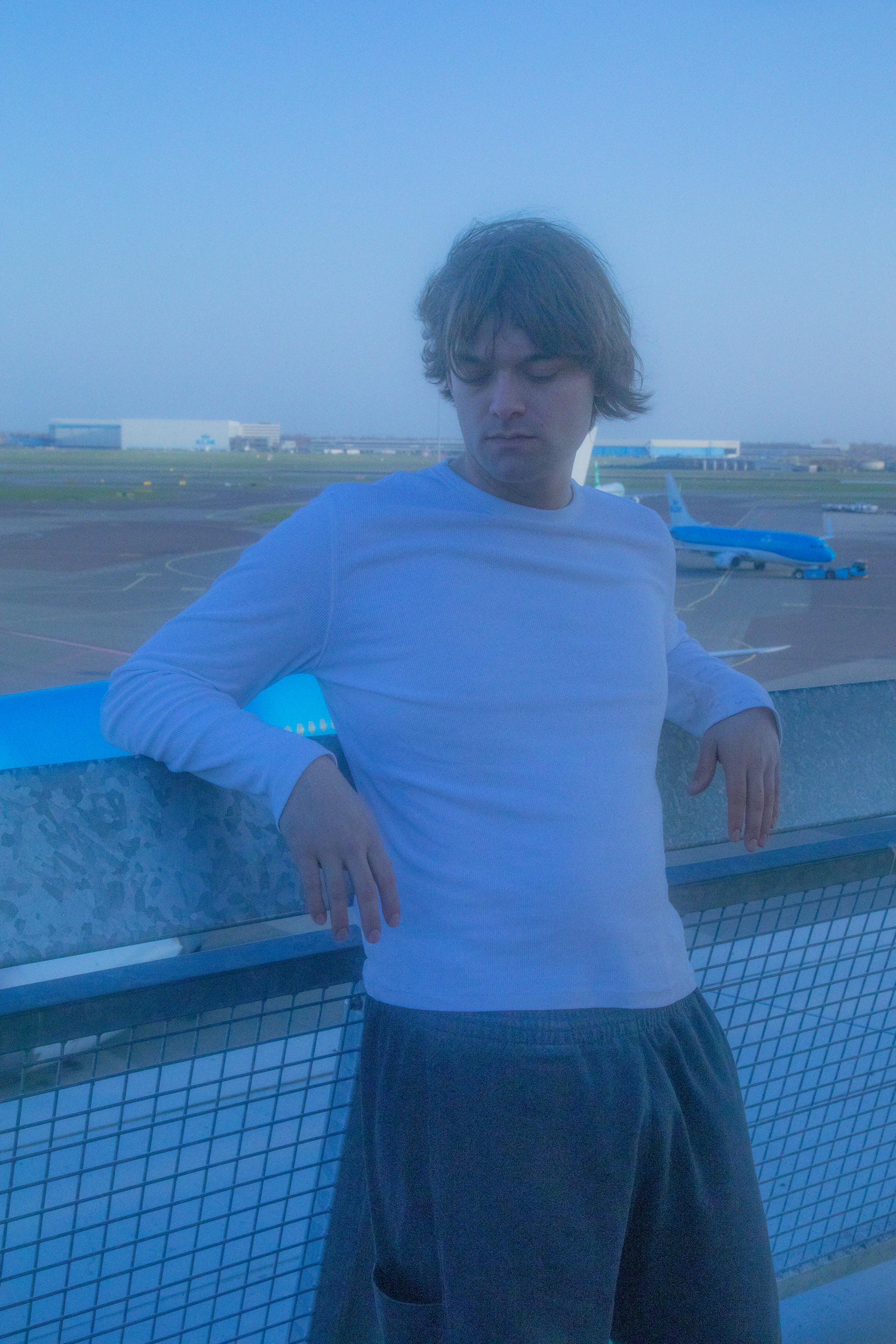
“I’m just an emotional musician”
What made your work special to me a long time ago, is that it always felt like you’re bridging a gap between mainstream and underground – as for various reasons I think the underground still exists. Back then, let’s say in the mid 2010s, pop edits were still a fresh approach. Until then you would usually say the mainstream is stealing ideas and copying aesthetics from the underground, as it always was. The agents of capitalism etc, but now it’s kind of twisted and it’s like they are both taking from each other.
This part of my practice started developing while I was in art school, when I was moving towards my graduation work 2015 and I remember that one of the first things I made was this Venga boys edit and that has a decent amount of plays on SoundCloud.
I think what made edit culture so corny is that people started making club edits of it and then it became a bit of a cheap thrill. In artschool I was making mashups of Burial and Soulja Boy and Justin Bieber, just making any combination the scene would consider illegal, like Aphex Twin and Mariah Carey. That wasn’t really actually making music though, I was just like putting acapella plus instrumental together, honestly pretty lame if I think about it now., but everything was very different back then.
Were you DJing back then?
Yes. Back then there was a big club in Amsterdam, Trouw, I remember playing there after an FKA Twigs show. Her first show in Amsterdam, I think. I was playing Afrojack and Tiësto. People were posting videos of it to Vine. I became a trance DJ to a lot of people because I was the only one playing this type of music in that context in the Netherlands. At the time a lot of people and outlets started projecting this trance hype on me, which is funny because I’m just an emotional musician, not a trance DJ. I was just playing trance because it made me feel nostalgic. And I recognized that if I play something nostalgic people get extra excited because they have an emotional attachment to these types of songs. But the moment everyone started interviewing me about trance I lost interest. There’s more emotional music than just trance…
But you’re also still connected to Evian Christ and his legendary Trance Party, and PURE, a series at Ibiza’s Cafe del Mar recently. So…
Trance Party is so good, just tenfold the amount of strobe and smoke you’d normally see at a party a great crowd, sharp curation of artists. Josh (Evian Christ) has a good feeling for new things that will blow up.
So how did he find you?
I think through Malibu, probably.
So Evian Christ, Malibu, lately Danny L. Harle – you’re hanging with the cool kids. How did you connect with them?
Lol. I got to know Malibu because I sent DJ Lostboi a DM on YouTube in 2016 to ask if I could use “If i should die”, back when it had 50 plays or something. for an RBMA mix. Malibu started following me on Instagram around the same time – I think Malibu and lostboi were already working together at the time – and we started DMing: “Let’s collab”.
We were close for years, but me and Evian Christ never really got to know each other until he was working on his Warp album rollout and he needed help from a Dutch person to organize a fake interview recording with Tiësto. This was the pre AI voices era.
[Laughing]
I guess he liked my music. So then we just started being in touch and playing together…
And what about Starlight Divergence, the record with Danny L. Harle? How did that come about and how did the collab look like? Cause a track like “Someone Like You” sounds so much like a Torus track to me. How did it work?
I booked Danny in 2017 and we’ve stayed in touch ever since. Around the time of his album, I was working on some creative for it, and we were chatting about this extension of the record; a format that would invite artists to rethink all of the stems of one song and turn it into an entirely new record. He asked if I wanted to be the first to do so.
Do you see your music on the dance floor?
Most of my music is not clubby, but somehow it’s being adopted by a lot of club DJs. I think there’s the spirit of dance music in it even if there’s no drums. When I DJ, it gets very clubby. I get booked to play a lot of club sets. I also play my own ambient music but I mix it. It’s kind of easy to combine with a techno tool or something breaky, a lot of my ambient work is still pretty rhythmic and even if it isn’t, it always fits pretty easily.
That’s also the perfect manifestation of my music for me – I only want to release the purest version of the music. I can add a kick to it. But then I’m only doing that because I want to turn it into a dance song. That’s not relevant to the composition to me. The DJs understand that you’re allowed to play it in clubs anyway. So that’s nice. It’s kind of the ideal outcome.

Besides being an artist, producer, and DJ, you’re co-running Laak, a pretty hip club in The Hague, as far as I heard. How does this work out? How did you get there?
I was asked by a friend that is a contractor and a big club fanatic, if I wanted to take on a big part of the creative control and curation of the yet-to-be-built club. Playing around the world, I’m in touch with a lot of scenes and artists. There’s so much cultural exchange that can happen when you have a fixed location with good sound. All I really do is invite people I meet and music I like to my hometown and show artists a good time.
This year there will be the first cooperation of Laak and the renowned festival Rewire. You’ve co-curated the night and are going to perform a B2B set with Pavel Milyakov aka Buttechno. What’s your relation to the festival?
Bronne, the director Rewire, always says I’m the artist that has played the most at the festival ever, and I think I played at the first Rewire too. We’ve been trying to make Laak an official venue for years now, so I’m excited to do it with this line-up. Kind of the ideal setting to come together with Pavel for the first time, he’s very close to the fest as well.
It’s nice somehow how it all relates to each other – Torus. The persona, the visuals, the sounds, the context it creates and works in, the aesthetics. it’s a good package
That’s all things that come after the music though. The music flows naturally. Representing the music as visual or a narrative requires a lot of intentionality and reflection. I try not to give away my control over the visual side because when I do it myself, it comes from the same place as the music, And even if it doesn’t, I want every aspect of a record to reflect the same sensibility. Luckily I went to art school for that.
[laughing]
Thanks for the interview!
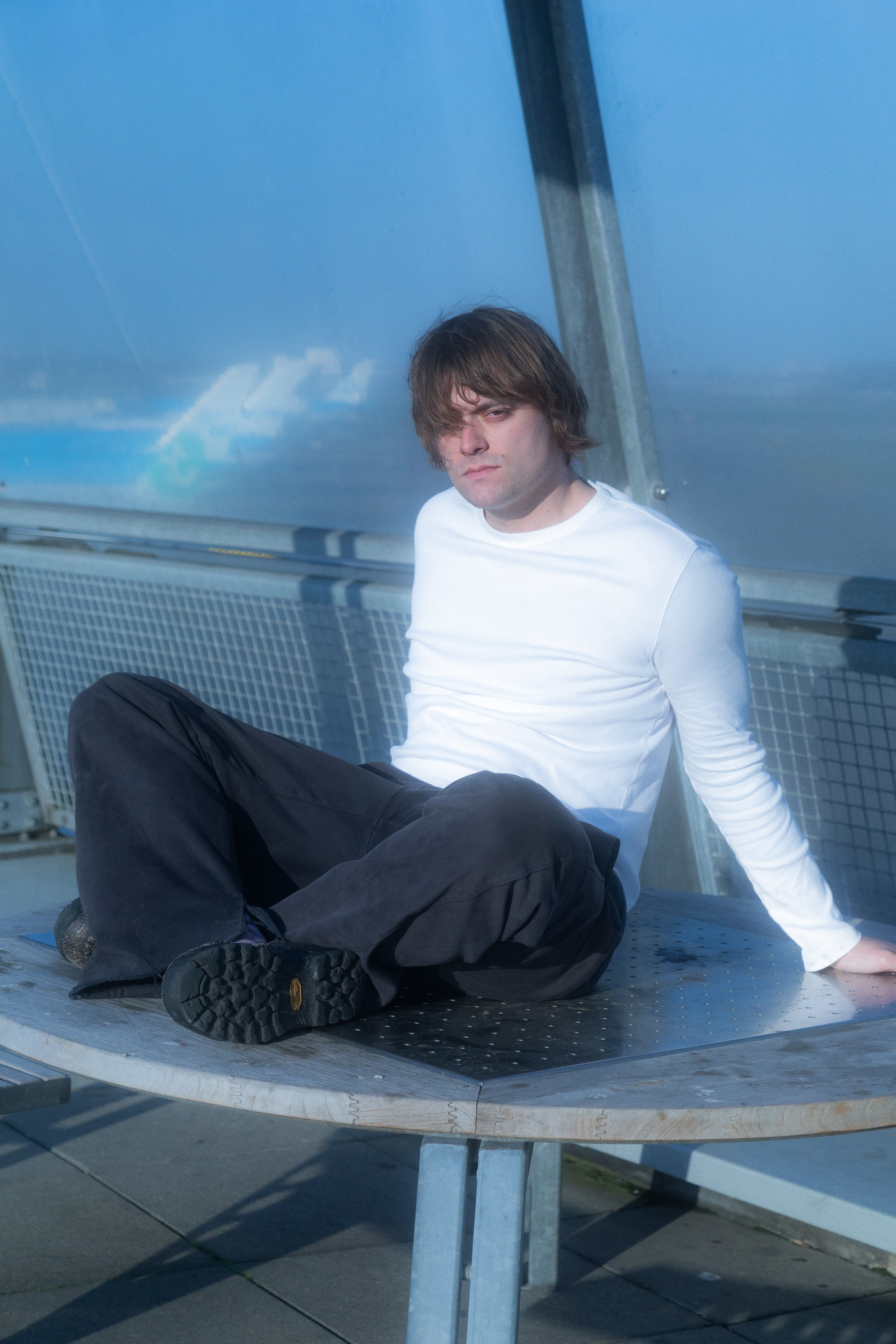

Torus