feeo: “That project feels like hyper-real me” – A conversation
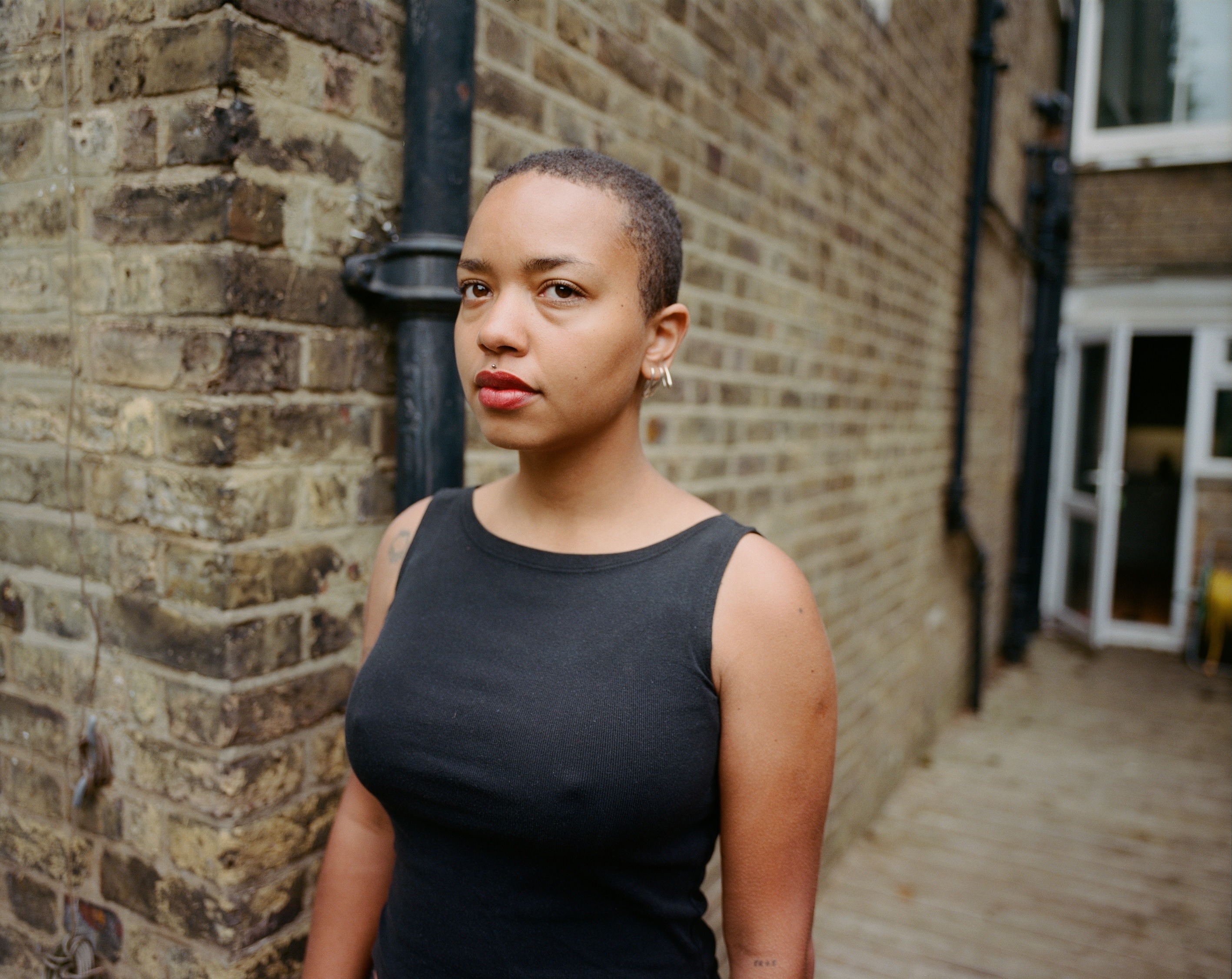
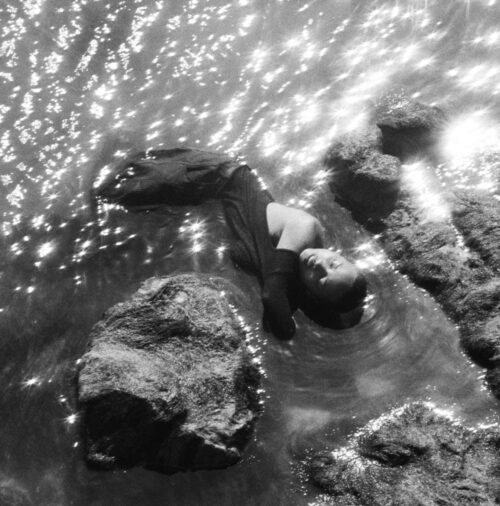
Abyssal and vehement, yet vulnerable and sensitive, fragile as much as powerful, sparse, but full of depth – like romantic poems, feeo’s songs are ambiguous, unfolding between opposites. Theodora Laird presents an Avant-R&B rich in references. The emotional quality of her voice recalls the romanticism of Joni Mitchell, the dynamic melodic lines of Björk or Alanis Morissette, the doomy qualities Anna von Hausswolff, and the sensuality Kate Bush. feeo’s debut album was released last year on AD93. A few months before her performance at Unsafe+Sounds Festival we meet her in London.
feeo: The life is beautiful thing was a lot of work.
Yeah, I can imagine.
feeo: There’s an aspect of me that’s guided by some kind of esoteric… I don’t know, things come up at a certain time and I believe, “I should do this because of the way that it’s come about and the way that it’s aligned.” And with that life is beautiful thing, those two choreographers (Violet Savage and Elisabeth Mulenga), I’d seen them both perform in a Holly Blakey piece a few years ago, and I researched the two of them, and it was kind of completely random that they both said, separately to each other, they wanted to work with me. And then I was like, okay, I have to do it.
Were you rehearsing a lot, or was it more in the moment that it came into being?
feeo: It was a piece, and I was talking to them a lot. I didn’t want to be assertive early on with the sound, and a lot didn’t work. ’Cause I was away and I’ve been moving house and I’ve just been so busy. And then I was just like, right, lock in. But then I was actually really happy with it.
What’s your relation to the collective?
feeo: Three or four years ago I had a job occasionally cleaning Ormside, and that was around the time life is beautiful started doing semi-regular shows at the venue, and I met aloisius there, and all of the members were involved, and then I got to know them individually. I think it’s really great that they got the funding to commit more time to making it more of a company.
My dad (Trevor Laird, Ed. note) was a part of Black Theatre Co-operative, which was one of the first all-Black theatre companies in the UK. He speaks about how back then you could approach the Arts Council, in the ’80s, before Margaret Thatcher, and ask, “Can I have some money for this?” And they’d be like, “Yeah.” Imagine starting a theatre company or a dance company now – how do people do it?

Yeah, every kind of collective art form is very tricky and difficult to manage, I guess. But also, on the other hand, film and theatre, they really have big budgets, not as in music. Music is very dried out.
feeo: Yeah, for sure.
But you do have kind of a band project, because feeo could be also perceived as a duo, at least your live performances, as they feature the musician Caius Williams. I recently stumbled across Crosspiece, a project of the two of you. What was the trajectory of feeo and what about the difference to Crosspiece?
feeo: My solo project has existed for 11 years. It used to be just Theo, my name. I changed it to feeo because it felt too obvious. That project feels like hyper-real me, and I still think of it as the same project that it was when I first started writing songs when I was 12. For me, it just existed.
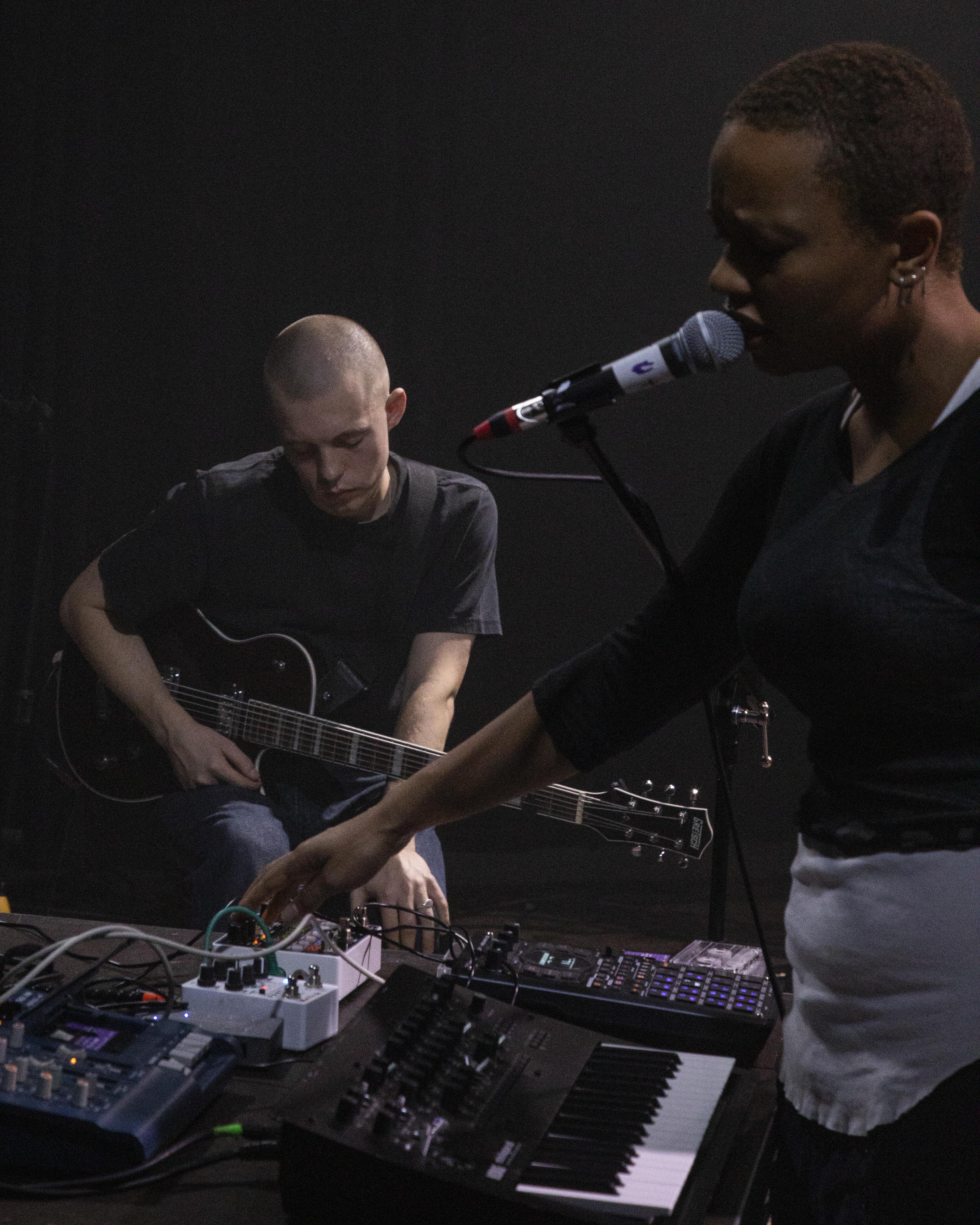
And for a few years Caius, my partner, was playing bass for feeo. But then this label, Cherche Encore, which is a really cool small independent label based in London, run by some friends, had this project. It was funded by the Arts Council, where they were doing collaborative releases, and they approached me to do something. And they were like, “Is there anyone you’d want to work with?” And I was like, it should be cool to make something with Caius, because we’d already been doing GRAIN at that point, which is this regular, more improvised-focused event series that we do.
“Improvised music is this transient, immediate thing.”
Is GRAIN taking place at a fixed venue, or does it actually move around?
feeo: It used to be at Avalon Cafe because that was where we both worked, and was in our local area. Now we mostly do them at the Horse Hospital and Cafe Oto. We did one at Ormside. It’s quite an evolving project. I think it’s become a lot more about space than we thought initially. Originally we wanted somewhere that was a regular environment to play and perform, and you just don’t really get that anymore.
It then became more about occupying these spaces and about DIY ethos and the kind of political intersection. And it’s very cross-generational. It has involved lots of the older free improv figures. Steve Noble is a really key person. He plays with Caius every week. They’re really good friends. And Maggie Nichols, I’ve played with her, and Phil Minton.
Improvised music is this transient, immediate thing. And a lot of the spaces that we’re playing in are spaces that are going to maybe be demolished at some point, or they’re going to be redeveloped, so there’s this weird, liminal moment where we’re able to do these things. And then I think that’s now more of the focus.
“this is about taking up these spaces and about DIY ethos”
That’s great. So what about feeo? How do you work together?
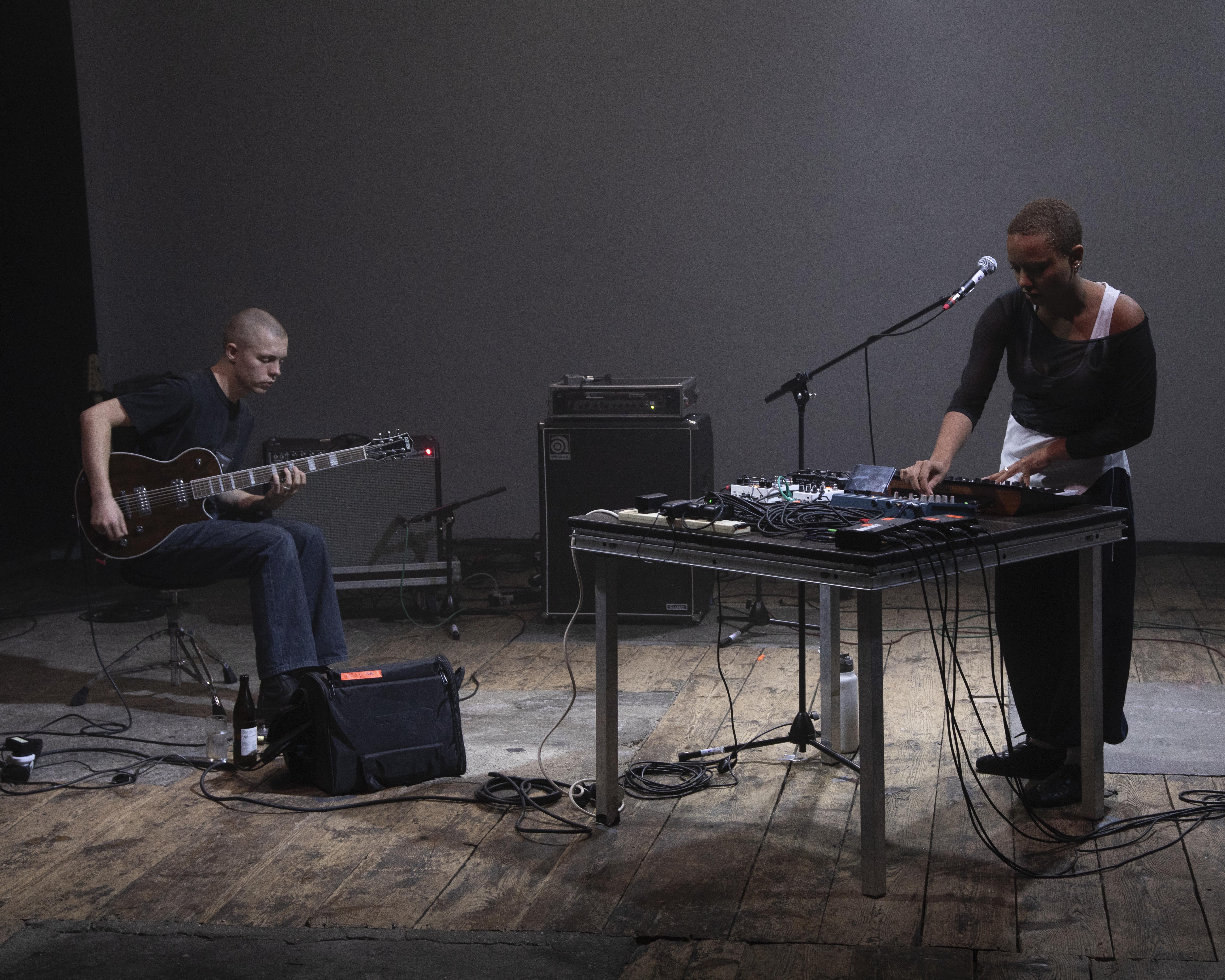
feeo: Caius brings an immense amount of energy – the live show is different when solo, without him. He’s very much involved in that as a live thing, but he’s not so involved in the recording, writing side of it.
Are you personally coming more from improvisation or if you’re more from songwriting and composition, or are these equal?
feeo:I’m coming from songwriting. That’s always just been what I’ve done. But it’s been really interesting. I started improvising when I met Caius, or maybe a year into our relationship. When GRAIN started. He was at jazz school and he was really interested in the UK free improv legacy and really just wanted to start doing something. And we worked at Avalon, and the guy who runs Avalon was like, “You should do something regularly here and I’ll support it.” And then that happened, and it was only really through that that I started improvising.
In the beginning it was just the classic thing of too many pedals. My voice was just going through so much shit. It was really electronic, and I was hiding behind it. And then just slowly over the years, I stripped it back, and got more confident with the singing. And it’s completely changed the way that I work.
I’m a perfectionist. I’m really neurotic. And I’ve really learned to deal with looseness, and I think that actually has maybe been the biggest change in the way that I make music ever. It’s actually better, and it feels fresher. It’s more accidental.
“I was just an alien”
I think so too. This record is also so special because it brings so many experimental elements in. And I feel this kind of pleasure in experimenting might also be informed by improvisation in some ways.
You said you started making music as a teenager already. So I’m wondering how you were musically socialized. Were you part of a community? How was the trajectory?
Feeo: There was no community. I was just on my own. I grew up in London. And then when I was much younger, we moved out of London to Oxfordshire. And I was just an alien. Me and my brother were just aliens there because it was extremely white. And not just white, also, I guess we always had quite a different way of seeing things because our parents are creative people. Their priorities and their ideas about life feel different.
But then your parents maybe felt also like aliens there?
feeo: Yeah, my dad definitely did. Because he’s Jamaican British. He was probably one of the only Black people around. And it’s very different when you’re an older Black man, I think. You get perceived as a threat in a way that I can’t even really imagine. So I think it was quite exhausting trying to hold that together.
“it feels almost an accident when you write a good song”
No community then.
feeo: Not with music. It’s a bit later on when we moved to Oxford City. So we moved out of the countryside. At that point, I was still making music. I started producing on GarageBand and I was 12, whatever. So funny listening back to it. It’s actually not changed that much. I saw this Subway take the other day, and someone’s take was: you don’t get better at songwriting. It feels almost like an accident when you write a good song. It just feels quite one-off every time.
And I actually think that’s so true because the songs I wrote when I was 12 actually really… My vocabulary’s changed and my approach has changed. I guess I was a bit more ham-fisted back then, and I was really focused on –
Ham-fisted. What does it mean?
feeo: Kind of a bit more… I guess more explicit. I think getting older and refining, for me, with songwriting has meant taking more stuff away. And kind of just being a bit more ambiguous.
But you’d say that this was your first, your go-to way to express yourself – music?
feeo: Yeah, definitely. Yeah, because I feel that this expressiveness is, again, very special in a way, because it’s very – I can feel it. And for sure it relates also to your voice.
“I was such a theatre kid”
Are you a trained singer?
feeo: Yeah, I did classical singing from when I was 12. And I did musical theatre later on.
Musical theatre even, wow.
feeo: I did. I was in Les Misérables – not in a big way, but just in a low-key way. I was the villain. Yeah, I was such a theatre kid because we just did all that, because I was always doing drama and singing and dancing. I did lots of more traditional training when I was younger. Did a lot of unaccompanied folk song. That was a big part of it because I think that was part of the classical curriculum back then. I don’t know if it still is.
I feel there’s something in your voice that’s almost like a blueprint of your soul. It feels very authentic and direct, as though it’s coming straight from within. Of course, when you’re performing the same show every night, that might feel different. But listening to your debut album Goodness (AD93), I hear a real sincerity, and I’m not sure whether that’s something you can train or whether it comes from an urgency to express yourself. There’s a necessity behind it, and I think that’s something the great artists share: this need for expression. So it’s not about craftsmanship so much, but about something more that’s coming from the inside..
feeo: Yeah. Wow. Thank you. That is how I feel.
For sure. I know it’s a super difficult term because we’re in a postmodern age and everything, and we don’t want to talk about authenticity, but I feel it’s a valid term still. Because to me it’s more – you’re not producing art for the outside world, but more for yourself.
feeo: Yeah, it’s interesting you say that because that’s been a huge issue that I’ve had since releasing the album. Because after this album, it just really put me in a weird headspace about that question – is it for me or is it for other people. Because you put something out and then, in this instance, it reached more people because it was on a label, and it led to international touring in a way that I haven’t done before. And you’re then coming up against other people’s idea of you.
Songwriting was always this thing that I would hide inside because I didn’t feel connected to the outside. It was a kind of self-soothing thing, a kind of way of resolving things, a catharsis. And then it’s really – when you’re doing that and then you’re dealing with people’s idea of what that means because it means something to them. And then it doesn’t really belong to you anymore.

“I didn’t feel connected to the outside”
Yeah.
feeo: It doesn’t feel like my first project. I’ve got other music out. It doesn’t feel like… And I was just quite surprised at how that affected me. It’s just a fine balance, I think, because if I was just making it for myself, it’d be a lot easier to just make it and not put it out and not deal with all of the bullshit. But I’m not doing that because I feel I have this urge to communicate, and in order to communicate, it’s a feedback.
But coming back to the songs and to the writing – I feel that the lyrics are very poetic. You mentioned the word ambiguous, and I also feel they’re working a lot within opposite poles – dark/light, self-empowered/fragile, forceful/vulnerable. This oppositional forces also show in your music. It’s polarized, but also that’s where the intensity comes from, I feel. What is your approach to writing?
But coming back to the songs and to the writing – I feel that the lyrics are very poetic. You mentioned the word ambiguous, and I feel they’re also working a lot with opposites – dark vs. light, strong vs. fragile, forcefulness vs. vulnerability. Thisoppositional forces also shows in your music. It’s very polarized, but also that’s where the intensity comes from, I feel. What is your approach to writing?
feeo: I always get these full songs in my head where I can hear everything, and it comes to me and it’s just, that’s what it should be. And then it’s impossible to make because it’s an idea. So that was the way I was working for a while, but it’s super counterproductive because I would just be trying to chase this white whale as I heard it in my head. And so what I’ve developed is this process now where I’ll let those things happen, and then I’ll write the vocal part based on what I’m hearing in my head, and then I just have to abandon the idea of the arrangement that’s in my head because I don’t know what it is.
Maybe it’s something that will come later in life, some kind of ability to directly translate what’s going on in my head. But no matter how detailed it is and no matter how close I think it is to being something that I could actualize, it always sounds bad every time I try. And then even when it sounds good, or even when it gets to a point where it’s maybe something that I’m okay with. It feels really overcooked because it’s something that I’ve clearly thought about and meticulously tried to piece together.
But then there’s also this other way of writing where I have a poem. So with the song The Mountain – it was just some prose that I’d written. I was looking at a hill in the south of France. And I was just looking at the cliff face, just writing about it.
Because the thing is with lyrics… It’s actually so hard to write them. The more I do it the more hard it becomes because it’s not just words. With poetry you can really focus on saying things exactly as you want to say them. But then good lyrics are so much about the phrasing, the melody. And the tone of the melody impacts the way they feel. If you’re explicit and the harmony is too, then it can feel really corny. You want things to land properly which can completely dictate the arrangement cause there’s all these factors.
Because as I said this oppositional forces – certain tracks are very dark I feel and some are very light and and I maybe it’s just a natural process in songwriting that different things come together but I’m wondering yeah how Caius is influencing the aesthetics as well as he obviously brings the droney, abyssal frequencies with his bass-playing.
feeo: When he first started playing with me the music was basically kind of neo-soul. Or it wasn’t really neo-soul but that was what i thought of it. I was playing the keyboard just straight up electric piano, there was a drummer and it was Caius playing bass and then we’ve just grown up together and we’ve found things together. His influences come from a progression from American jazz into free improvised stuff and then when he was a kid he was really into rock bands and then we both got into metal and rap. And a few years ago we started just getting really into that drone music.
Like what for example?
feeo: Sunn O))).
I can really see that.
feeo: I think it’s so hard to know the source of your influences when you have been around someone so much in your early 20s, you influence each other. I mean I’ve never seen Sunn O))) live but I’ve seen Stephen O’Malley solo and that was one of my favorite shows. Caius has picked up a lot from metal in his guitar playing I think, using amplifiers as instruments. I’ve always been more into dance music, and more recently an interest in how to work with a sound system.
That kind of music, in its best context, is coming out of a system that has a lot of frequency separation. The way that subs and tops are used – the oppositional forces – that kind of frequency contrast can illustrate them sonically. You feel sub frequencies, and you hear the detail on the top, and that’s what I think about while I produce.
It was similar in the score for the dance piece (for life is beautiful). A big focus of mine was: how am I gonna play to this room with this big system? I think, in our different ways, Caius and I have come to that interest together. His is expressed more explicitly within guitar and bass amplifiers, and mine is maybe more with an interest towards sound systems.
Which kind of dance music are you most into?
feeo: I’m really into Gabber – actually funny – and Tekno, like free tekno definitely minimal dance music. Not minimal as in the formalized genre but more just minimal in the arrangements.
I know it for sure.
feeo: It’s quite hard to find that kind of music in London. The city favours jungle and drum and bass I think. Maybe happy hardcore and more sort of acid techno and it’s a good crowd but it’s not the same.
Yes.
feeo: But I don’t like to talk about music in terms of genre but more in terms of ethos. I just get quite specific about the kinds of kick drums that are used and the ways that they interact with speakers. I really don’t like the sort of Berlin techno where It feels like you’re in a big room. You know that kind of churning techno where it feels like you’re inside a warehouse and that’s the point, with loads of reverb on the kick drum.
But on the other hand I was thinking of hauntology as well when listening to your sounds. Like you can hear these kind of haunted sounds and echoing, reverberant beats in your recordings as well and I was thinking about Burial and London.
feeo: I love Burial. I think Burial has definitely had an influence. That approach to separation… he does that really well. Always got the texture on the top and rumble in the low end. I went to Goldsmiths, I was all over the hauntology/ Mark Fisher stuff.
Okay, what did you study there?
feeo: It was computing and fine art.
Which kind of dance music are you most into?
feeo: I’m really into Gabber and Tekkno, like free techno. Definitely minimal not minimal as in the formalized genre but more just minimalism across. I go to this festival every year called Bang Face.
I know it for sure.
feeo: It’s honestly because it’s really hard to find that kind of music in London because the city is stuck within the rave idiom. London favours jungle and drum and bass and also happy hardcore and more in the realm of acid techno and it’s a good crowd but it’s not the same.
Yes.
Feeo: But I don’t like to talk about music in terms of genre but more in terms of ethos and I just get quite specific about the kinds of kick drums that are used and the kinds of the way that they interact with sound systems. I really don’t like the sort of Berlin techno where It feels like you’re in a big room. You know that kind of churning techno where it feels like you’re inside a warehouse and that’s kind of the point and it’s kind of industrial, and there’s loads of reverb on the kick drum.
But on the other hand I was thinking of hauntology as well when listening to your sounds. Like you can hear these kind of haunted sounds and echoing… I was thinking about Burial and London.
feeo: I love Burial. I think Burial has influenced definitely that approach to separation i think he does that really well where he’s always got this interest inf texture in the top and then he’s got the more driving low end and it’s high contrast in the same way i think that it has been an influence. And then when I read that Mark Fisher, I went to Goldsmiths, I was all over that shit.
Okay, what did you study there?
feeo: It was computing and fine art.
What did you learn there, computing? I don’t know.
feeo: I learned how to code. It was quite interesting. It was quite an experimental bachelor where they’re teaching you to code, but they’re only giving you hyper-specific creative applications for it, and then you basically have to be doing fine art critical theory and developing your own work. Honestly, I don’t use it, but the thing that’s stuck with me the most is probably the critical theory, because it’s just essential to learn about postmodernism.
Isn’t Kodwo Eshun also at Goldsmiths?
feeo: Yeah, I think he does lecture there. But he is more on the visual cultures.
You were with Mark Fisher?
feeo: No, he passed away before I was there.

“I grew up singing Alicia Keys.”
The first time I saw you live was at Berlin’S CTM. and I was so inspired and heard so many references. You seem to listen to a lot of music. Are there any singers that heve inspired you on long turn?
feeo: Joni Mitchell, John Martyn and Nick Drake. When I was younger, my dad was coaching me in breath control because, as a theatre actor, that’s what he has to do. He’d always use Anita Baker as an example because she sings with an open throat, which is what I do as a result. So probably her in some way. There’s probably some more. I think buried at the bottom of the origin story is Joni Mitchell.
Why? Which qualities in her singing did affect you?
Feeo: To my mind, it’s only specific songs because I don’t like a lot of them. But I think it’s to do with phrasing. Song for Sharon is one of my favourites, and Blue as well. When I listen back, she manages to do that thing of balancing phonetics with storytelling, and you can actually understand what she means and follow it. It’s really hard to be both poetic and straight up. I think she does that really well. But also her voice, the way she uses her voice is, I guess, more in that folk style. It has this pure quality.
Honestly, I think maybe the most that I would reference her would be in how I try to write melodies. But in terms of actual sound, I don’t know. When I was much younger – and obviously you copy when you’re younger, you’re learning –I think maybe I was trying to sound like her. But there’s loads of more R&B-inspired qualities to my voice that I’ve developed because I grew up singing Alicia Keys.
“I was already on stage when I was six”
I see.
feeo: Yeah, before any of this shit, I was into pop music. I would just watch the charts. That was what I did every day after school. I would just watch the music videos on 4Music or whatever. So I think probably all of those guys had an influence as well.
Yes, yes.
feeo: But in terms of sound, I don’t listen to other people and think, oh, I want to sound like that necessarily.
When was the first time you stood on stage? Do you remember?
feeo: I think I was… What kind of stage?
Any stage. Because your stage presence is very strong.
feeo: Thank you. I honestly, I remember being on stage. I mean, okay, I’m going to lower it down because I think I was already on stage when I was six years old. Just at some holiday resort.
Yeah?
feeo: I’m not gonna count that talent show.
Oh really?
feeo: When I was maybe eight or nine.
But for music or?
feeo: Yeah, I was singing Alicia Keys. I was singing A Woman’s Worth.
(laughter) Nice.
feeo: And then I did a lot, when I was doing musical theatre, I’d do loads of… Judy Garland whatever showcase-y kind of belters
Why did you turn away from music theatre?
feeo: I mean to be honest I still have a lot of love for it in terms of… I don’t know, I think it’s actually a really interesting area of performance. But there aren’t that many people that I know of doing musical theatre in a way that isn’t cringe. And I’m just, why is that? Because it kind of makes perfect sense. You’re on stage, you’re acting, you’re singing, you’re dancing. That makes sense. You know, you could do that in loads of interesting ways, why is it mostly shit?
Thanks much for the interview!
feeo