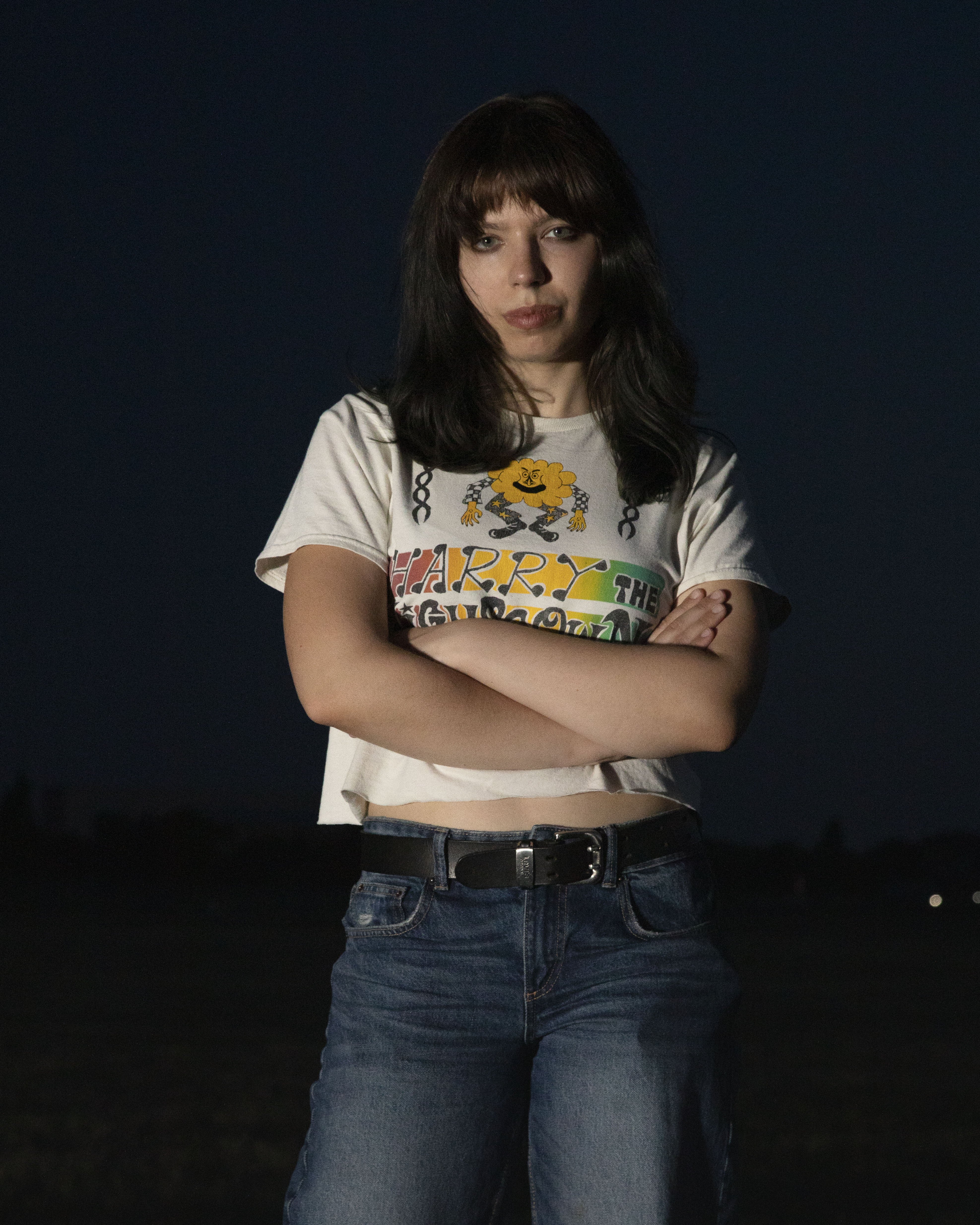
“A psychosomatic beast, a force, a messenger, a siren, a signal, a recognition biometric”- In conversation with Ugnė Uma
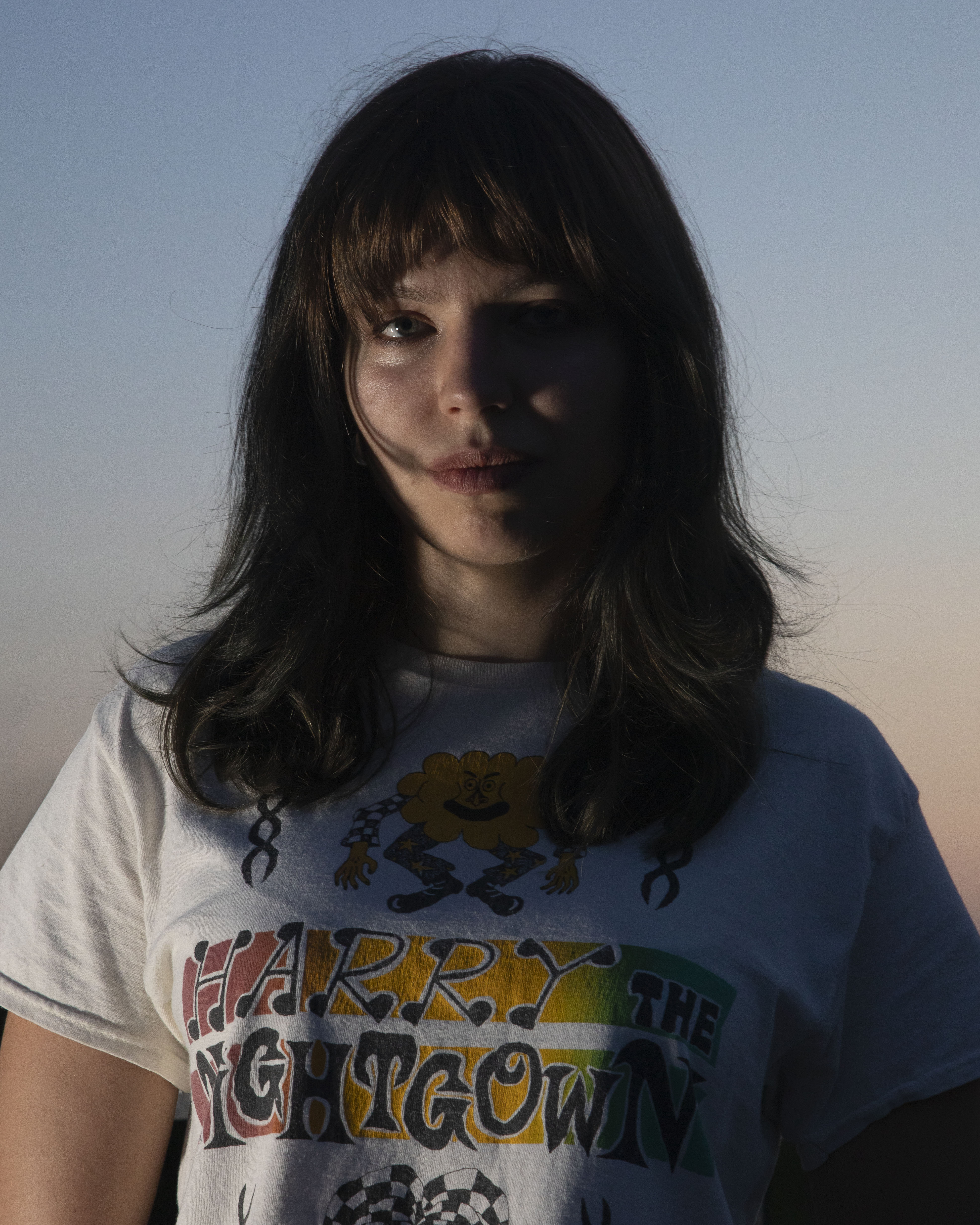
Dear Ugnė, how are you? Where do I find you these days? You’re on holidays in Vilnius?
Ugnė Uma: Hi, Shilla. After a couple of weeks in Vilnius, I am back in Berlin. An interesting time – after playing a concert on a Berlin rooftop under a red full moon, in forty-degree heat, with intense lightning all around, I immediately got on a train and, 16 hours later, was already home. It felt very clear to me that this was a kind of baroquely theatrical ending of a certain stage, and every ending implies a beginning, so I felt more as if I was greeting than saying goodbye.
The time in Vilnius was perfect, in a completely peaceful intermediate state – rarely is it a peaceful state, but this time it was; those days were like gemstones. Returning to Berlin, I lost clarity. At first, this made me very anxious. Later, I understood that at the end of stages you receive an ephemeral gift – a moment of clarity – and soon after, having understood what you managed to grasp, you are returned again into the messy orbit of the beginning, into first grade.
You were born in Vilnius, right? A few days ago I was talking to a friend, whose partner is Lithuanian. He was telling me about these huge singing events, where massive choirs would form in arenas. Can you tell me a bit about your social upbringing? Do you come from a musical family? Were you in a choir or similar as a child?
Ugnė Uma: Yes, I am from Vilnius. I did sing in the Great Choir at the Vingis Park amphitheatre, my grandmother did too when she was young. This park is one of the oldest forests within the city, and the river flowing around it carries the echo of the choir across the entire city, you hear the choir kilometers away. Lithuanians like to sing together, it so effectively charges the internal batteries. I think a lot about how important it is to preserve and nurture this tradition, make it a culture, to bring back meeting friends just to sing.
During my teenage years, I sang in a choir in a music school. I hated it. The energy of a hundred teenagers standing on uncomfortable choir risers felt like a psychosomatic torture. But it never harmed the genuine need to be surrounded by music at all times. The inspirations came from elsewhere.
“the genuine need to be surrounded by music at all times”
I had a conversation with the singer Abdullah MiniawyAbdullah Miniawy a while ago, you probably know him. Like you, he has a strikingly exceptional voice, and I was so surprised to find out that he had no classical training. So I don’t dare tell anymore, if singers are autodidacts or not. How did the art of singing find you?
Ugnė Uma: While my voice was trained by the discipline of choir for a few years in adolescence, it always felt as though choral singing came from different vocal cords, from different pipes, not the same ones I could feel when singing by myself. There were a few attempts to have a band with friends – the mandatory thing of teenage years – but to me that also didn’t feel like my voice. Because of that, I fell silent for a long time. The process of coming back to singing made me a self-taught singer.
I began to understand that the voice is the guts, hooked into our deepest feelings and experiences – that it is a psychosomatic beast, a force, a messenger, a siren, a signal, a recognition biometric. Through it, we can both attract and frighten.
I wanted to find out where that “real” voice was hiding. It was tough, the nervous system was sending me signals of danger while the blocks were clearing up. Emotions, reminding me of space junk, were stacking up on top of the voice and there’s no other way than facing them again while digging deep towards the voice. The voice that showed-up first sounded different from how it sounds now, and I don’t think the one I have now is the final one either. It’s so cool that there is no final voice. It transforms as the tectonic plates of the inner world shift.
Because this was my path, I feel a bit like Bob Ross, firmly standing by the belief that everyone can sing. Another thing is having enough available resources to mess up with the mentioned in-between process. You can’t get out dry, but it’s worth it. One of the most interesting things that happened in my life.
“the voice is the guts, hooked into our deepest feelings and experiences”
There’s a very specific, female sensuality embedded in these songs. That carries them to a different level of sensibility. It’s this very soft, comforting character that your songs have, they’re like warming the soul. You feel less alone listening to them. Yet they shimmer dark and infinite, like deep water. I think it’s the soul in soul music, this depth. How do you reach this state of expressivity? Are you channeling directly from somewhere? Is it magic or is it craftsmanship? Is it intuition or is it practice?
Ugnė Uma: As a music listener, I value music that is “comforting” a lot. What interests me is the impossibility to fake “comforting” music, like, there’s no method you can follow to reach that. Maybe I shouldn’t generalise, since comfort is such a personal experience, but just to explain my take: I do not see “comforting” going hand in hand with the terms “easy” or “feel good”, although these things could be comforting too. I feel “comforted” when music makes me feel understood. Therefore I am honoured to hear that my songs are “comforting”.
I see music as a vessel in which different, mutually interacting elements exist. Their combination, the subtle friction between them, can suddenly feel familiar. Experiencing a moment of recognition inside such a complex, immaterial work brings a rush of joy – as if, together, you and the creator of the piece both knew the secret of the universe for one second.
You know the feeling of getting dizzy listening to Alice Coltrane? It feels like praying at the altar, high on incense. Even the genre suggests that it’s spiritual music, spiritual jazz. But recently, ten years too late, I heard Yung Lean’s “Ginseng Strip 2002” for the first time. That was spiritual for me too. I felt understood, that song felt like a best friend. It was reflecting and validating what I was going through at that moment, the mood felt exactly right fitting mine. That’s what I mean, to feel understood. These dirty simple lyrics in combination with divine backing track… A song that makes you feel like a dirty mechanic who’s just crawled out from under a car hood, found the source of the engine failure, figured out the secret of the universe, and fixed their own engine. Perfect example that it’s all magic.
Therefore, speaking about the state of expressivity – I apply the same kind of dirty-simple attitude here too. Let yourself channel the Cosmic Energy, no over-cooking, green light and go.
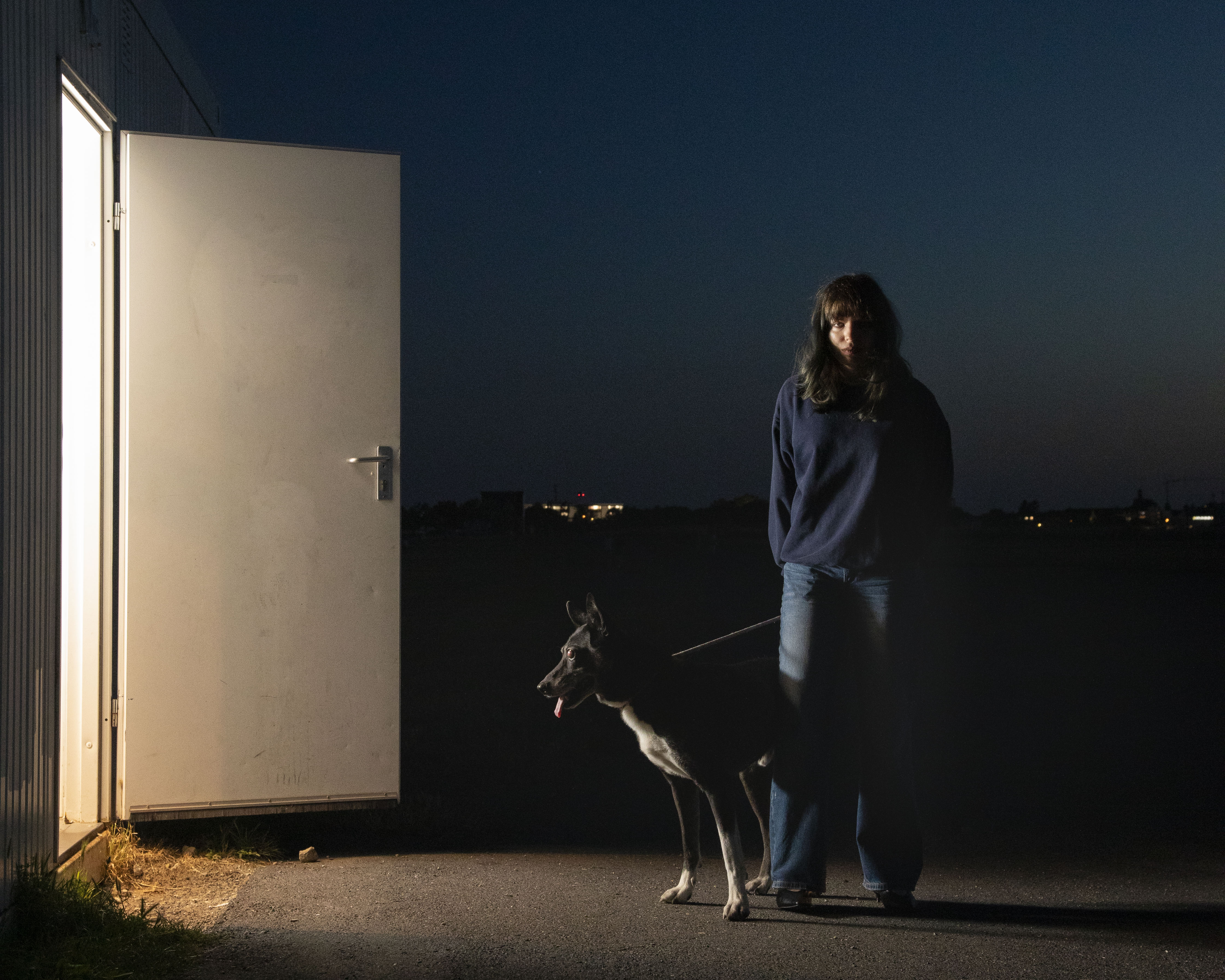
“it’s all magic”
Your voice is what immediately catches attention. It feels like a touch. It makes an impression instantly that you can’t escape. The graininess of your voice, the haptic quality, the tactility – it’s almost as if it’s an ASMR session, listening to your songs. I’m not sure if there’s a way to reach this on purpose when singing? If it’s a way to record. But I believe it’s really the quality of your voice.
Ugnė Uma: At some point I had become quite good at accurately linking vocal timbres to people’s inner states. Sometimes I would even go on sonic “hunts” – would invent a character with a backstory in my head, and then, at some gathering or event, where everyone’s outside smoking and talking, I would look for the voice whose timbre best matched my scenario. As if I’m casting for a movie. One time I couldn’t complete the mission, got on a train to go home, and a guy sat down across from me with the perfect voice for my imaginary character. It felt like winning my own game.
So the topic of timbre keeps me captivated. Sometimes, after hearing someone’s voice, I don’t even want to know what they’re saying anymore. And when I hear a really good voice, I can listen to it for ages, being intimidating and demanding more of it.
But just when I had started imagining myself as some sort of “voice detective”, people in the audience began telling me that while singing I shift between several different voices, becoming different characters. I had never noticed it, imagine that. Humbling experience. Listeners were there before I was. The voice remains an elemental and mysterious medium.
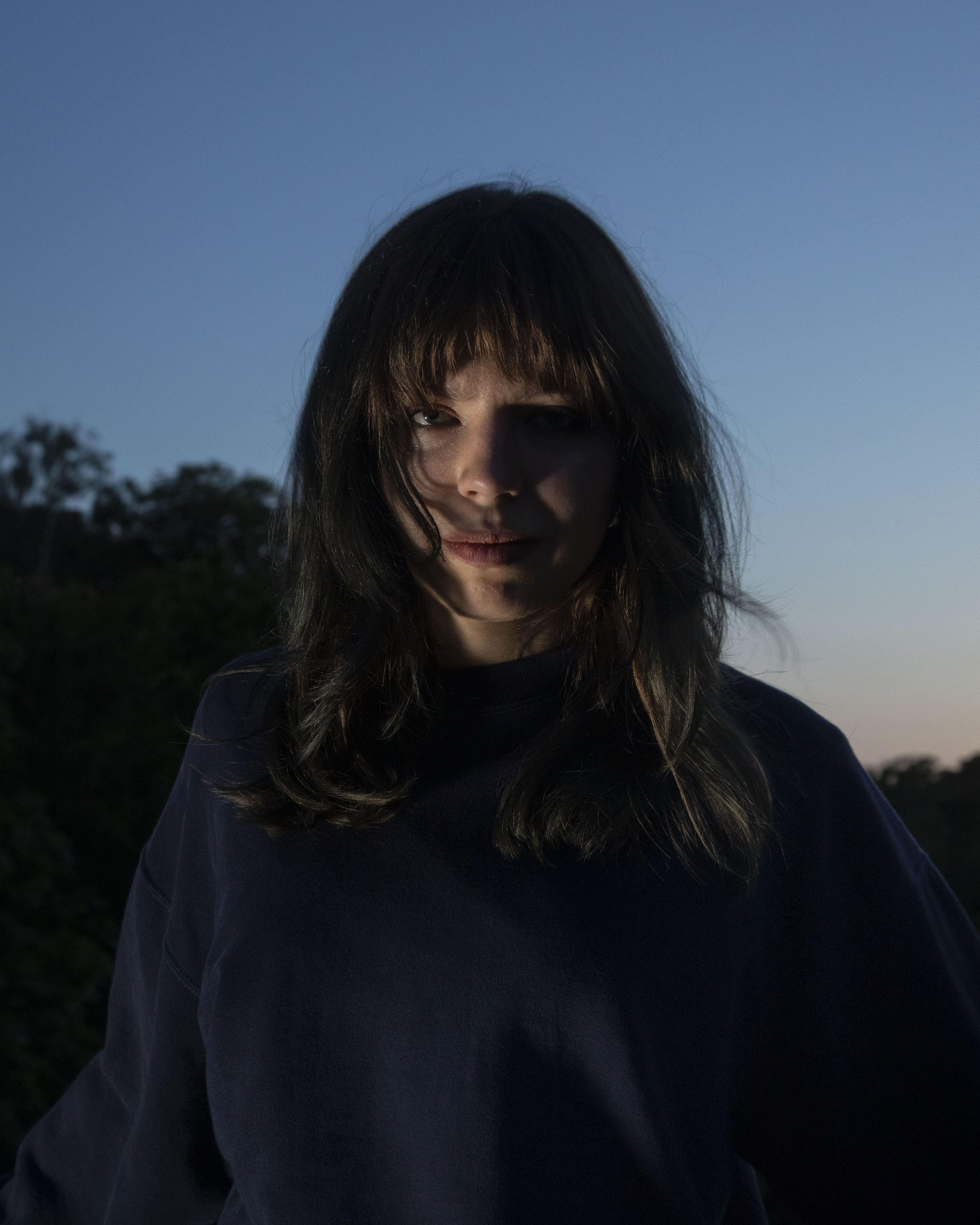
“The voice remains an elemental and mysterious medium”
Which role does the timbre of a voice play in creating intimacy? Have you ever thought about that?
Ugnė Uma: The voice mercilessly gives away a person’s inner state. If you manage to respond empathetically to the timbre of someone’s voice, to gently and very openly reflect back to them “what I hear”, it can become the beginning of a meaningful, more intimate connection. Moments like these remind me of scenes in action films, when the heroes, after running for what feels like the entire film, suddenly find themselves alone together and take off their sunglasses.
It’s true that a voice’s timbre can seem to make it obvious what a person is thinking, even when their words contain no information that confirms it. Although, with enough practice, interpreting timbre can become remarkably accurate. Therefore, an important lesson I always remind myself of is this: the elegant thing to do is to ask, to check in instead of assuming, and to start the conversation from a place of openness rather than from the assumption itself. Because, despite how accurate the assumption may be, the vast majority of people have no control over their voice and don’t even realise how much they are giving away. A sudden, on-point reflection can come too early and scare them away, resulting in them shutting important things away even deeper. That is why, paradoxical as it may sound, I would be inclined to classify the voice as a non-verbal signal.
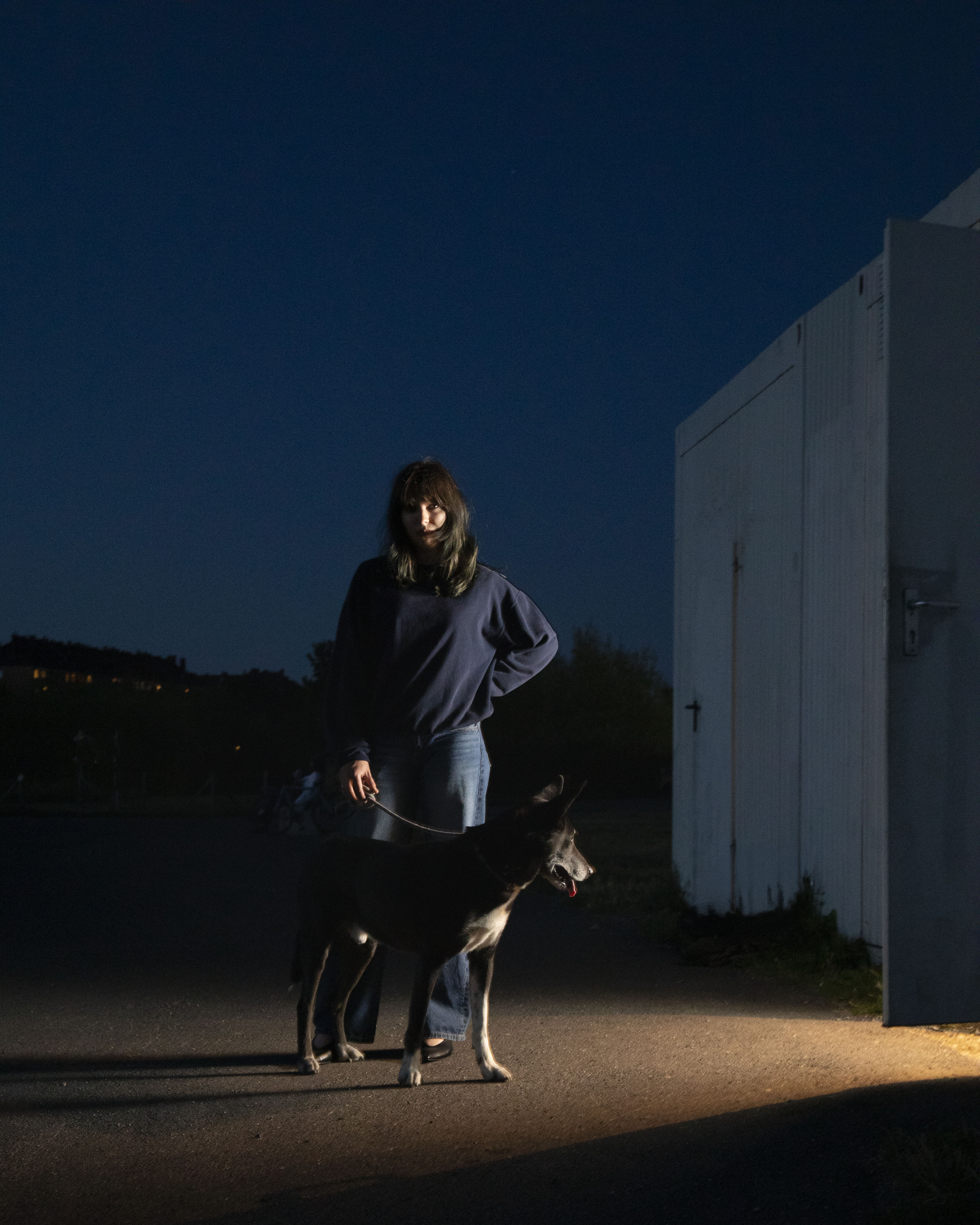
“the beginning of a meaningful, more intimate connection”
At the same time, the quality of your voice is not only tactile, and soulful and deep, it also carries a lightness. And I was thinking about why, and feel like the lightness comes from not asking anything from me as a listener. The songs are fine with themselves, they’re like jewels. Ready to be found, but they don’t force themselves on you, which also transmits a feeling of self-empowerment. What’s feeding you? Where do you draw the strength from?
Ugnė Uma: You really made me think. Maybe, the impression that my music “asks for nothing” might come from the fact that I don’t necessarily make it in order for it to be listened to. I create it because that’s how I untangle my feelings, quite simply, it’s a form of neuroregulation. Egoistical reasons. Most people keep a diary for that purpose.
Speaking about diaries – my writing, on the other hand, is the complete opposite. I write in order to be read. Even my early childhood attempts to keep a diary would begin by addressing the imaginary readers audience: “Dear all, do you know what happened today?”
I don’t know why that is, this differing need for an audience’s presence. Maybe it’s as physical as the structure of the brain. When I realized I was becoming part of the music scene, it wasn’t easy for me. I felt pressure to inflate the importance of this genuinely nonchalant way of making music, to ride that horse. And however much I try, I still don’t care too much about being “an artist”, while sometimes, even (and especially) in conversations with close friends I am afraid to be confused for not being grateful for how it is going. I am very grateful and so stoked to meet people who come to my gigs, but I am curious about them as people – who they are, what they do – not as my listeners per se.
Are there singers that inspired you on the way?
Ugnė Uma: Given this opportunity, this time I want to publicly once again honor the widely honored Jeff Buckley. He had insane vocal possibilities available for use and it felt that he didn’t care too much. I guess I’m trying to say that it seemed that his musical gift was such an integral part of him, rather than a mastered tool. And then he also cared very much, because of exactly the same reason. I hear the way he’s thinking in the way he’s singing. His phrasing in music is very prominent, and I feel musical phrasing as thinking. I’m generally a bad impersonator but sometimes I can sing Buckley’s musical motifs sounding similar because I follow not how it sounds, but how, I assume, he thinks. Singing has a rapidly moving logic, and that logic can be understood. For example, I think that’s also how Timothée Chalamet is able to become Bob Dylan, straight from the NBA’s front row.
Jeff Buckley allowed himself to be playful, light, while deep and dramatic. There’s this video on YouTube where he’s a guest host on the Viva music channel: the way he suddenly comes up with jingles, goofy voices, how unserious yet vulnerably sensitive he seems. While some might say he’s aware of his magnetism, his attractiveness, I’m not entirely sure that’s the card he was playing. I guess that he was certainly very aware of the never-ending, unlimited possibilities of the sounds that come out of his mouth, which, to me, equals an extraordinarily strong intuition about his own internal palette of shades, depths, and surfaces. He seemed to have installed reminders of our human and spiritual multifacetedness, of eternal and ethereal freedom. Maybe, if we’d lived at the same time and been in the same room, I’d never have approached him. I would have been scared of how good he was at being alive.
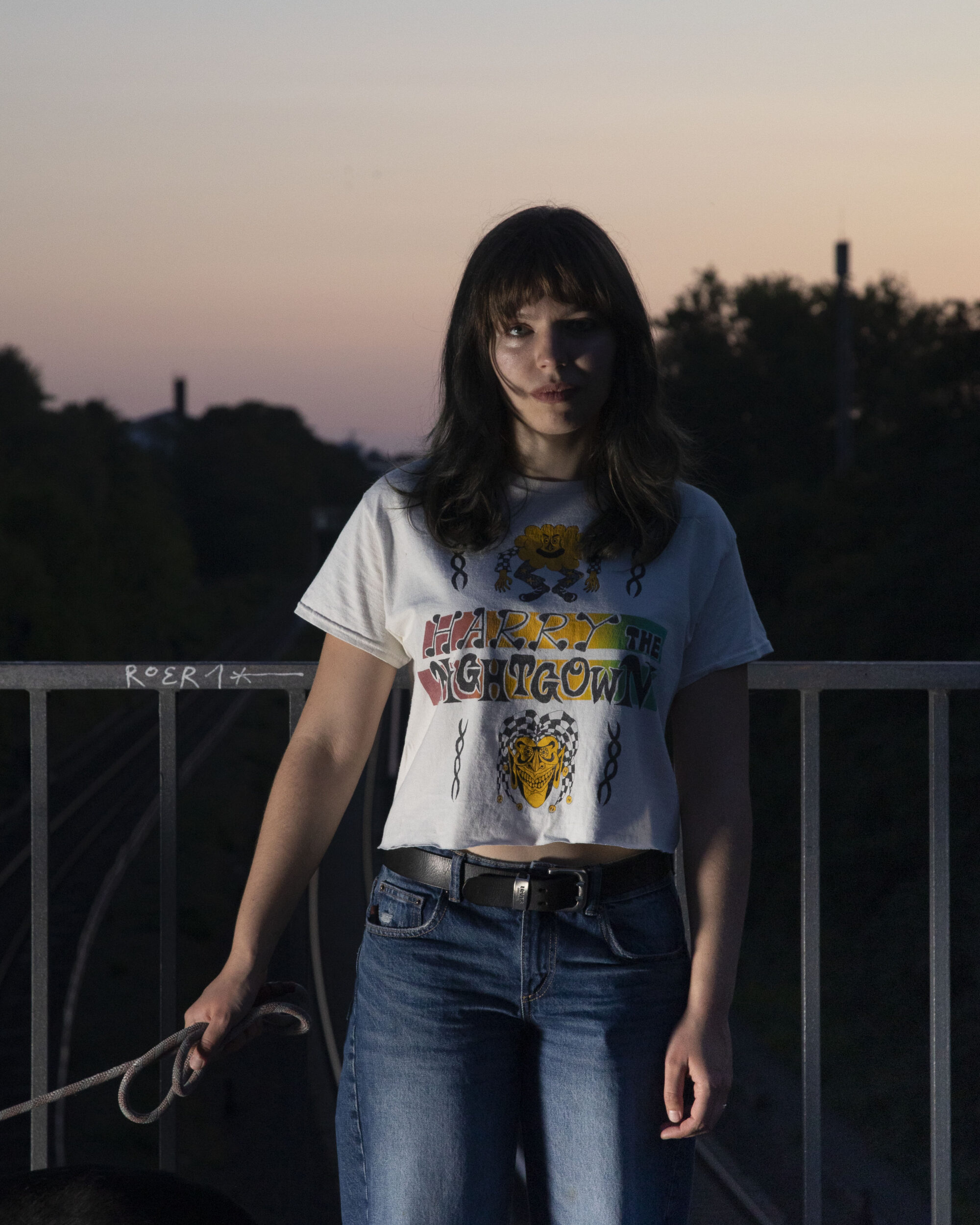
“please understand our history and stand with us”
Lithuania is a Post-Soviet country. Its history is one of repression by Russia. There are horrible stories that exist from the time of Russian domination. At the same time, the history is also about the resistance and final independence of the Lithuanian people. Would you consider yourself a political person?
Ugnė Uma: Thanks for bringing this up. Being called a Post-Soviet country is the same as calling people, who had to go through hardship, a Post-Trauma people. That can be limiting in a way: you’re still defined as prey, within the framework of a predator.
Lithuanians never had the luxury of taking freedom and independence for granted. It is something that our ancestors fought for and parents fought for. Having an aggressive, imperialistic neighbour means carrying a heavy history, and here we are, in 2026, facing geopolitical threats again. Now my generation has to fight for freedom and independence again – and like all young people, we’d like to be careless and stay naive, but this option is not available.
I give references: MTV had already been on air for 10 years when, in 1990, in Vilnius, Soviet forces tried to take our national broadcaster, the TV tower, and the Parliament by force, using tanks, running over the legs of people and killing them. The world was listening to Madonna; Lithuanians were standing around fires in the winter cold, unarmed, singing, hoping that the Soviets would be too afraid to spill blood. My entire family was there. Comparisons help to avoid the isolation of these events from the timeline of the world, in the context of nowadays people being afraid of difficult topics.
If I can say one thing: please understand our history and stand with us – the small countries with thousands of years of magical history, the people of the free world. Help us protect our language, our songs, our mythology, our culture, our cities, and our people. Once I posted Lithuania on the map on independence day and said – please be familiar with where we are. Someone commented: “We know!”. Two words from a stranger, but they meant so ridiculously much. The right to be free is not a matter of politics. It is an inherited general human right, which cannot be violated. Therefore, if people are treating war or existential threats as politics and express their uninvolvement in this matter, they are just trying to escape their human duties. That’s surely not a lightweight topic.
When did you leave Vilnius?
Ugnė Uma: 2 years ago.
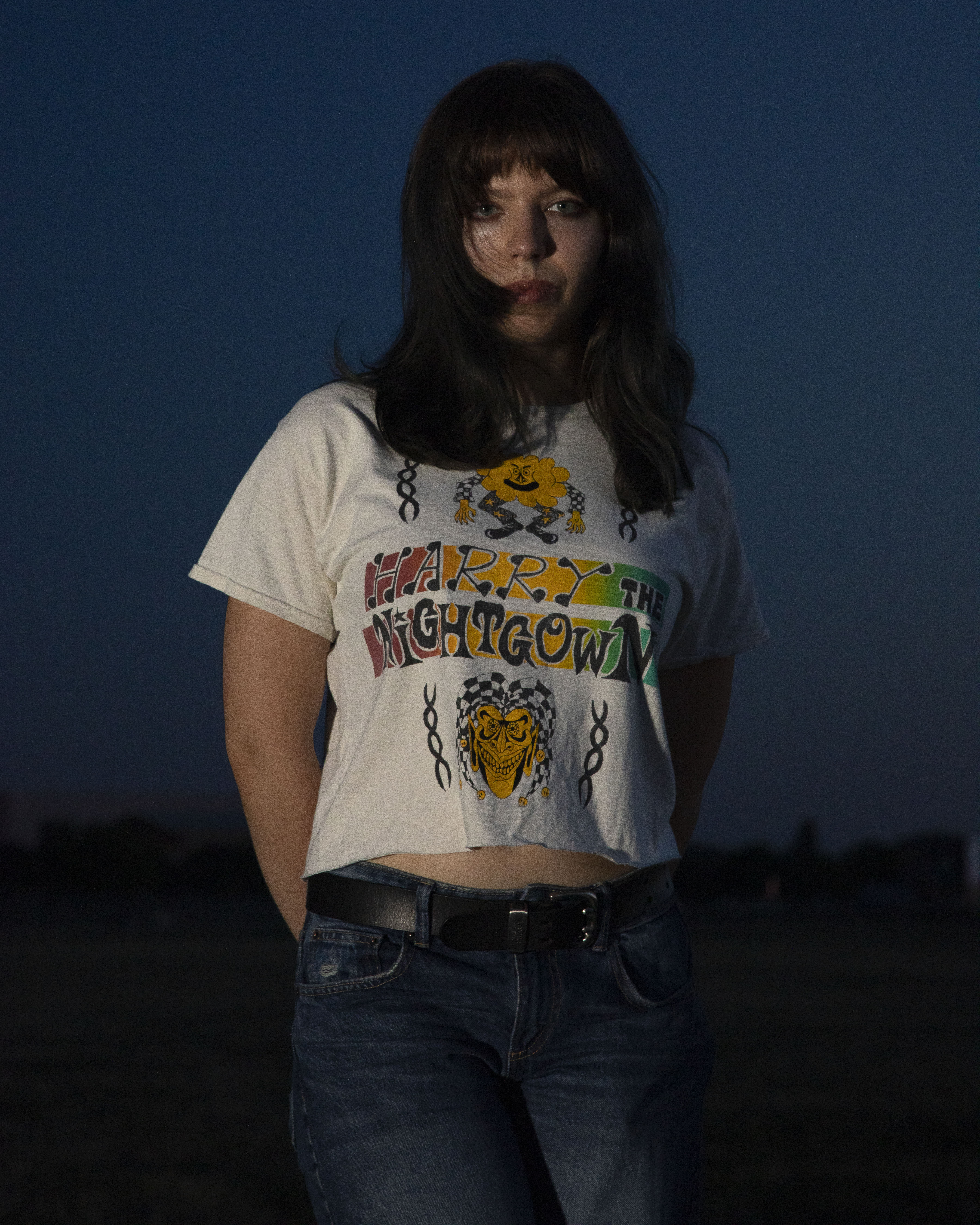
I’ve never been to Lithuania, could you paint me a picture? What’s the country’s landscape looking like? Are there lots of forests?
Ugnė Uma: The air smells amazing. I like to joke that Lithuania has that energising northern morning light all day, which I miss terribly while being in Berlin, which always feels like 4pm.
Old, dense, calm forests, deep lakes, meandering rivers. Endless species of birds, bees, wild animals, many people growing their own food. Lithuanians know very well how to forage herbs, mushrooms, and wild berries. Lagoon with little boats, lighthouses and the salty, cold Baltic Sea with gentle dunes, wild roses, pine needles pricking your sandy feet. Of course, the Curonian Spit peninsula – the place of my dreams and all my friends’ dreams. Nowhere else in this world have I ever felt as one with the Geist of the world as I have there.

And then what’s the capital like? What’s with the music scene there? Has everyone left?
Ugnė Uma: Vilnius is full of people. Like a liquorice candy, sweet in a different way. Sacred trees and ancient pagan sacred sites, but also Baroque intertwined with Gothic ensembles, and then industrial uptown areas; trees, remnants of castles, a Classicist cathedral but also clunky XX century architecture, concrete Lego houses next to elegant and hopeful art-deco from the interwar period.
While Vilnius is famously deep into the theater culture, the music scene has always been thriving too. There is a strong jazz, especially free jazz and jazz improv tradition – Dalius Naujokaitis with Nojo Orchestra, Vladimir Tarasov, Džiazlaif, Vilnius Jazz Festival. Strong classical and contemporary classical realm with talented composers – the young generation is such a power house – music directors and world class soloists, Asmik Grigorian, Žibuoklė Martinaitytė, Kremerata Baltica orchestra. And, of course, an endlessly inspiring, springy sweaty punks and DIY music culture, taking care of the underground. You should check out Retrito Smarsas, Empty Brain Resort, XI20 also called Skylė (The Hole).
Vilnius has been one of the cool spots for clubbing, yet now – following the tendency of entire Europe – clubs are closing. I remember waking up at 4:30 am, walking 300 metres to a busy club with Function Ones blasting, meeting sleepy-eyed friends at the entrance, just to hear our favourite DJ. The programming was great, all-stars,it felt like a luxury. Big names were often curious to visit Vilnius, having heard good things and promises that in Vilnius you could still find a certain authenticity that no longer exists elsewhere. And the thing about Vilnius is that these promises were true.
If the line to the club was too long, we would start with our favourite underground place next door, meet too many friends and enemies there, then finally climb through a fence to catch the second half of the set at the club. Funnily, the clubbers were calling the audience of the underground place next door “scarf people”. They said: “Y’all always wear a scarf with any outfit”. Never saw anyone with a scarf but mythology for a not too big capital city is a mandatory thing.
The people are bright, curious, intelligent and stylish. Sometimes a bit painfully intertwined because of the city’s small size. What I appreciate the most and try to preserve within myself too – digging deep and sticking to truthful honesty at all times, even if it is uncomfortable. We’re not the best at making small talk, my hairdresser was the only person capable of that..
Vilnius is endlessly a place to be – but for those who have spent a very long time there, it is also natural to need an escape for a bit.
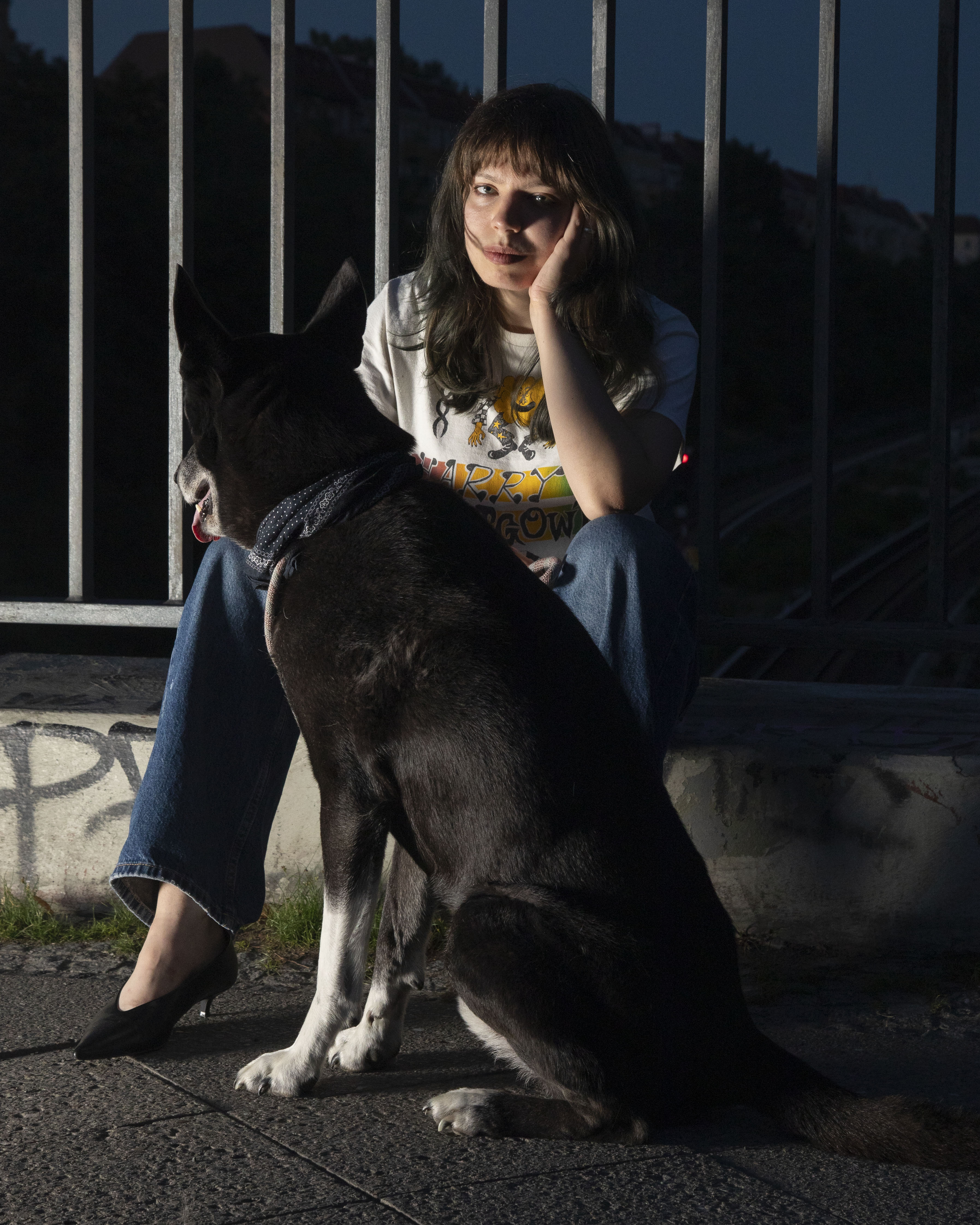
“I feel the magnetism. Unexplainable, invisible, powerful, hard to miss, hard to catch – stars attract stars”. Your spoken word parts, often in Lithuanian, have a very poetic, lyrical quality, even if I sometimes can’t understand the words. It’s the sound of the words and the rhythmical quality of their delivery. What’s your relation to poetry?
Ugnė Uma: Divine use of speech poetry is. So useful for expressing things that are usually hard to put into words. Lithuanian is one of the oldest surviving Indo-European languages in Europe, sharing some of its words with Sanskrit. It makes it perfect for poetry: the depth of words, the countless synonyms with very subtle differences in meaning, the metaphors that are already stories, codes in contexts, encryptions allow you to formulate the ethereal peculiarity and miracle of being with an almost impossible precision.
My friend, artist Saâdane Afif, started introducing me to other people as a poet – I feel unworthy of this title. In my head I subscribe to the Platonic idea that philosophers should rule the state… and I tend to place poets among philosophers. Let’s say I see poets as the intuitive, right hemisphere of the philosopher’s brain. Therefore to be a poet, in my eyes, is such a big deal.
On the other hand, in a capitalist culture where many are looking to profit from one another and networking non-stop, being introduced as a poet is punk. It’s an attitude with a pinch of humor and resistance. Quoting the classical Lithuanian poet Henrikas Radauskas: “I build no houses, I found no nation, I sit beneath the leaves of a white acacia.” I’m working on embracing two roles within me: a poet and a lazy gal.
This is a very big question, but I’d like to look into it: How do language and sound and feeling relate to each other? How does it feel to sing in English in comparison to your mother language?
Ugnė Uma: I think the mother tongue is the home of our thoughts, while learned languages are the vacation houses or offices. It’s sometimes freeing to become a little more distant from yourself through a foreign language. Also, it is so beautiful that inner translation, even when it becomes automatic and you no longer feel it happening, still controls the way of expression, or at least slows the thinking a little. A moment to enhance. But also I’m all up for the moment to embrace.